
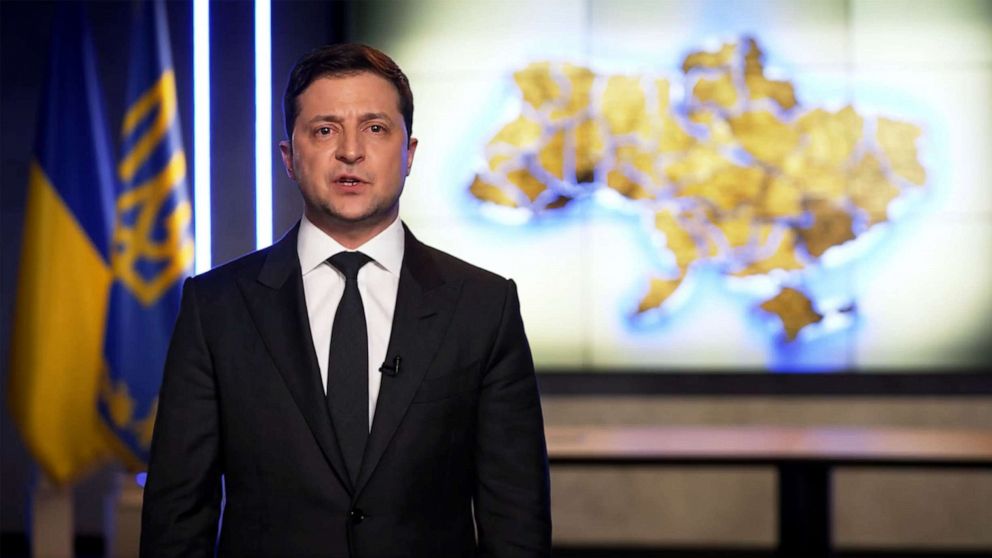
ROME, July 15 — The mechanics of Europe’s energy relationship with Russia are shifting again, and the clock is ticking on a key transit arrangement. Ukraine’s President Zelenskyy has made clear that no new deal will be signed to allow Russian natural gas to flow through Ukrainian pipelines after the current five-year transit agreement expires on December 31, 2024.
The catch is that this transit deal, signed on January 1, 2020, has been a central piece of the pipeline map that once saw Russia supply roughly 40% of the European Union’s natural gas in 2021. Ukraine has earned transit fees for hosting that flow.
But the war changed the arithmetic. By mid-2023, the European Commission reported that the EU had reduced Russian gas imports to less than 10%.
Follow the pipeline routes
Russia holds the world’s largest natural gas reserves, estimated at 1.3 trillion cubic meters as of 2023 by BP Statistical Review. For years, it built infrastructure to move that gas westward. Nord Stream 1, which opened in 2011, was a direct link to Germany under the Baltic Sea.
That pipeline was sabotaged in September 2022. The Yamal–Europe pipeline, another major route, has also seen its flows curtailed.
On closer reading of the numbers, the EU’s rapid diversification away from Russian gas—from 40% to under 10% in roughly 18 months—suggests a structural break, not a temporary dip. But the transit route through Ukraine remains a live issue because it still moves some gas, and because the deal’s expiration will force a decision.
Zelenskyy’s red line
Zelenskyy’s comments reject any arrangement that would see Russian fuel supplies resume to Ukraine or pass through its territory. That position is unambiguous. It means that even if European buyers wanted to keep buying Russian gas via Ukraine, Kyiv will not sign the transit contract needed to make it happen.
The implications are straightforward. Without a transit deal, the remaining Russian gas that reaches Europe via Ukraine will stop at the end of 2024.
European buyers will need to secure supply from other sources—LNG terminals, Norwegian pipelines, or alternative pipeline routes—or face a tighter market. What to watch next is whether the EU, having already cut its dependence sharply, can absorb the loss of the Ukrainian transit route without price spikes. The mechanics here are about pipeline capacity, not just political will.
Russia still has other pipelines, but the sabotage of Nord Stream 1 and the political rejection of new deals through Ukraine narrow the options. The question is not whether Europe can do without Russian gas, but how smoothly the final decoupling will play out.




