
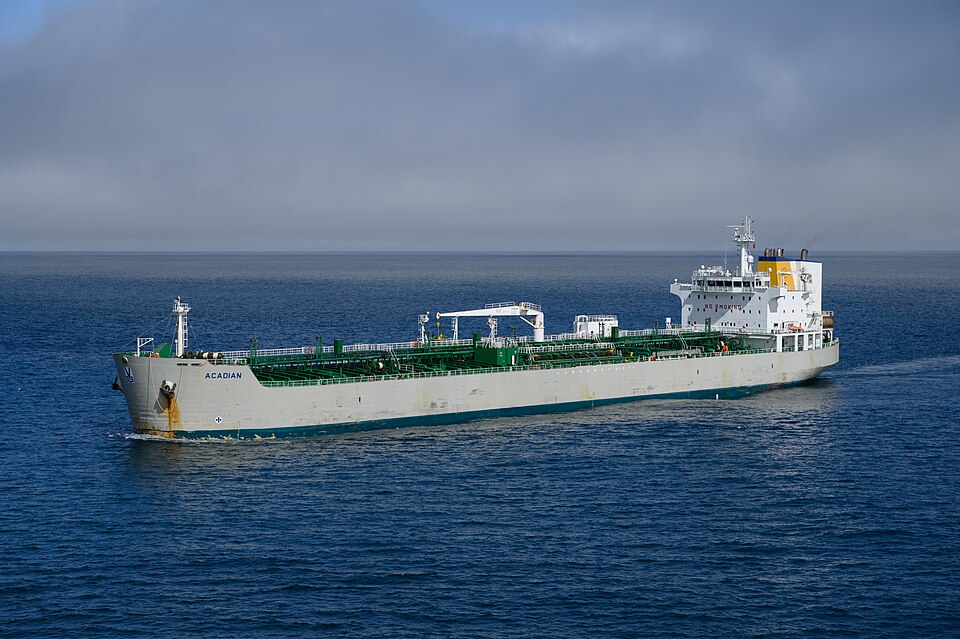
MANILA, July 21 — For communities across Asia, the Strait of Hormuz is more than a line on a map. It is a narrow waterway between Oman and Iran that connects the Persian Gulf to the Gulf of Oman — and a chokepoint through which roughly 20 percent of the world’s petroleum moves every day.
That amounts to about 17 million barrels per day, a figure from 2019 that remains the most recent benchmark for understanding just how much fuel for cars, trucks, and power plants depends on that slender strip of sea. The strait’s importance to Asian economies is hard to overstate.
The oil that passes through it supplies refineries in Japan, South Korea, India, China, and Southeast Asia — including the Philippines. When tensions rise around the strait, the ripple effects are felt not just in boardrooms but in the cost of transport and electricity for families across the region. Iran, which sits on one side of the waterway, has repeatedly threatened to close the strait in response to international sanctions or military conflict.
Such a threat is not new, but it carries real weight for energy security. In 2019, the stakes became tangible.
On July 19 of that year, Iranian forces seized the Stena Impero, an oil tanker, and held it until September 2019. The incident sent a clear signal: the strait could be weaponised. In response, the United States established the International Maritime Security Construct in November 2019, an arrangement designed to protect commercial shipping in the area.
That coalition remains one of the main guarantees that tankers can still transit without disruption.
The Price of a Full Closure
A full closure of the Strait of Hormuz would trigger a sharp spike in global oil prices. Analysts often draw a comparison to the 2020 price war between Saudi Arabia and Russia, which briefly drove U.S. crude futures into negative territory. That episode was extraordinary, but a closure of the strait would be even more disruptive — not just for traders but for ordinary households in Asia that depend on affordable fuel.
The strait remains a critical chokepoint for global energy security, and any instability there immediately becomes a concern for millions. For now, the strait remains open.
But the combination of past seizures, ongoing geopolitical tensions, and the sheer volume of oil that passes through it means that families across the region — whether in Manila, Jakarta, or Tokyo — have a direct stake in its safety. The International Maritime Security Construct continues to operate, and no major new incidents have been reported in recent months. Yet the underlying pressures have not gone away.
Iran’s repeated threats to close the strait, linked to sanctions and regional conflicts, keep this issue alive in the minds of energy planners and policymakers. What to watch next: any escalation in U.S.-Iran tensions, new vessel seizures, or diplomatic moves that affect shipping in the Gulf.
For communities in Asia that rely on stable oil prices, the Strait of Hormuz is not a distant trouble spot — it is a place where global politics meets the family budget.




