
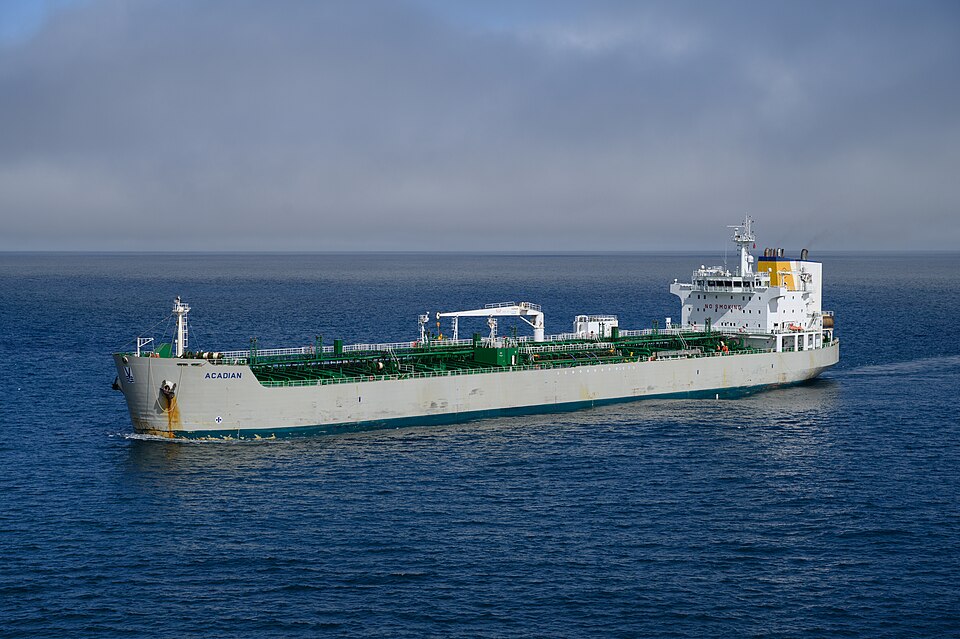
The verified development, on Monday: the United States announced a 20% levy on all cargo moving through the Strait of Hormuz, alongside the reimposition of a naval blockade of Iranian ports, as American forces carried out a third consecutive night of strikes on Iran. President Donald Trump said the United States was “taking over” the strait, declaring on Truth Social that the country would be “known as ‘THE GUARDIAN OF THE HORMUZ STRAIT’” while insisting that “all other countries will have fair and open use of the strait”. The announcement, first reported by CNBC, drew mockery from Tehran and accusations of “piracy”.
According to the US military, the five-hour overnight mission struck targets across Iran, including the coastal cities of Bushehr and Bandar Abbas, in an effort to “degrade Iran’s ability to attack commercial shipping”. Iran answered in kind. The United Arab Emirates reported that Iranian forces struck two ships in the strait, killing one crew member, and Iran’s Revolutionary Guards said they had fired missiles and drones at Bahrain, targeting a residential building housing US forces along with other facilities. By Monday the Guards had also announced strikes on Jordan, Kuwait and Oman; Jordan said it shot down four incoming missiles. Iran insists it aims only at US interests in the Gulf, while its military command has warned that any Gulf state cooperating with Washington would be deemed to have committed “an act of war”. Trump, at the White House, promised more: “We’re going to hit them very hard tonight, and we’re going to hit them hard tomorrow,”
How the toll would actually work remains unresolved. As described, ships transiting the passage would owe Washington 20% of the value of their cargoes — framed by the administration as reimbursement for a US Navy presence that keeps the waterway open, on the logic that foreign nations which benefit from that protection ought to be the ones paying for it. Nothing is settled on collection: naval interdiction, sanctions on shipping companies and secondary tariffs on goods from non-complying countries are all on the table, and the vagueness itself works as leverage. Shipping insurers moved within hours; market sources in the Lloyd’s of London market elevated the strait to war-risk status, a move that pushes premiums up for every tanker operating there, whatever flag it flies.
The market reaction was immediate. Brent futures leapt by more than 4% as Asian markets opened Monday, and analysts at JPMorgan assessed that a credible threat to the waterway alone — no ship actually stopped — would be enough by itself to build a $10-$15 premium into every barrel. The geography explains the nerves: Hormuz is the busiest oil chokepoint on the planet, with about a fifth of the world’s petroleum passing through its narrow 33-kilometer-wide passage each day. The record shows what a closure means — an earlier flare-up, in which Iran shut the strait and struck five Gulf states, briefly pushed Brent above $130 per barrel.
The exposure map runs from Tokyo to Riyadh. Japan, South Korea and India source the majority of their crude imports through the strait. China, Iran’s largest oil customer, faces a collision between its purchase agreements with Tehran and the threat of US secondary sanctions for paying tolls to Tehran rather than Washington. And Gulf exporters are caught in the middle: Saudi Arabia, Kuwait, Iraq and the UAE each move their own crude exports through the passage, and the toll as described applies regardless of national origin. Gulf Cooperation Council members have been seeking clarification on whether allied exporters get exemptions; Saudi Arabia by itself ships on the order of 6 million barrels daily, a volume on which a 20% charge would run to billions of dollars monthly.
The strategic context is a campaign that has escalated across 2025 and 2026 — sanctions layered on Iranian oil revenue, on the Revolutionary Guard Corps and on Tehran’s regional proxy networks. Iran began blocking the strait after US-Israeli attacks in February, prompting Washington’s original port blockade; restrictions eased after a preliminary deal in June that lifted it. Now the resumption is formal: Trump notified Congress last week that the conflict had resumed, giving the Pentagon an additional 60 days of operations without congressional approval. Iran’s Foreign Ministry spokesman Esmaeil Baqaei called the June memorandum “in crisis”, while saying Tehran keeps talking with mediators from Qatar, Pakistan and Oman. Foreign Minister Abbas Araghchi mocked the plan on X — conceding Trump was “absolutely right” that whoever guarantees passage should be compensated, but that “20% is of course too much,”. International law generally forbids such tolls, a point Washington itself has pressed against Tehran in the past. The next test is concrete: whether a non-US-flagged tanker transits without paying, and how the Navy responds. That single incident will show whether the toll is real policy or a bargaining chip.
Sources
- Trump Plans 20% Toll on Strait of Hormuz Cargo
- US launches third night of Iran strikes as Trump unveils 20% shipping toll in Strait of Hormuz
Sources
- Trump issues expletive-laden threat to Iran over Hormuz Strait blockage
- See the latest updates, context, and perspectives about this story.




