
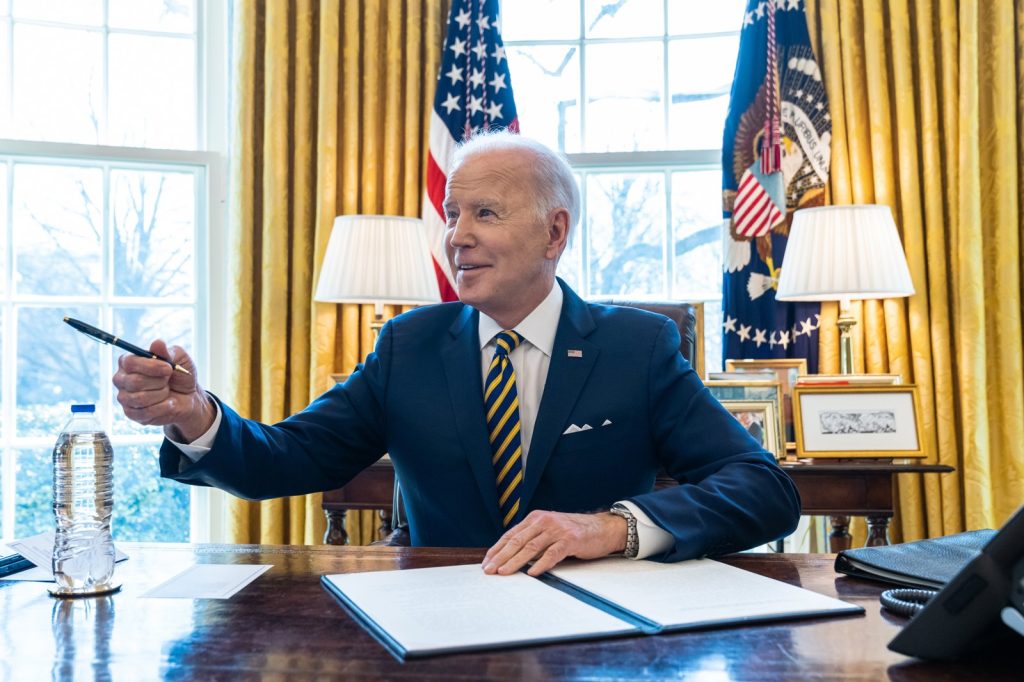
BRUSSELS, July 11 — Against the backdrop of a war that has reshaped global energy flows, the architecture of Western sanctions on Russian oil stands as one of the most consequential — and contested — policy tools of the past four years. It began in March 2022, when President Joe Biden announced an immediate U.S. ban on imports of Russian oil, liquefied natural gas, and coal.
That action, taken in coordination with allies including the United Kingdom and the European Union, covered about 8 percent of American oil imports — some 700,000 barrels per day of crude and refined products from Russia. The EU followed with its own phased approach, banning seaborne Russian crude oil imports effective December 5, 2022, and refined products effective February 5, 2023.
The wider picture, however, is one of persistent evasion. While the G7 price cap on Russian oil, set at $60 per barrel from December 2022, was designed to reduce Moscow’s revenue while keeping global supply steady, Russia has found ways around it. In the corridors of energy markets and maritime insurance, a quieter story has unfolded: Moscow has been selling its crude to India, China, and other countries at discounted prices, often using a so-called ‘shadow fleet’ of tankers that operate outside the standard Western insurance and shipping networks.
What is at stake is not merely the effectiveness of a single sanction but the credibility of the entire Western approach to economic statecraft. The price cap mechanism was a novel instrument, intended to squeeze Kremlin finances without triggering a spike in global prices that would hurt Western consumers.
Yet the circumvention has been significant enough to prompt debate about whether the strategy needs recalibration. Now, with the Trump administration in office, the conversation has shifted. Proposed tariffs under President Donald Trump would differ markedly from the Biden-era approach.
Rather than targeting only U.S. imports of Russian energy, the new framework would impose secondary tariffs on countries that buy Russian oil. This represents a potentially far more aggressive posture, one that could draw third-party nations — including major buyers like India and China — directly into the enforcement net. The mechanism of secondary tariffs is not new in American trade policy, but its application to energy sanctions would be a significant escalation.
It would effectively tell New Delhi and Beijing: either reduce your purchases of Russian crude, or face penalties when exporting goods to the United States. The diplomatic calculations in the corridors of power across Asia and Europe are already shifting as officials weigh the implications.
For European capitals, the stakes are particularly high. The EU has already absorbed considerable economic pain from the sanctions regime, including inflation and energy price volatility. A secondary tariff system that pressures India and China could further tighten global oil markets, potentially driving up prices for European consumers still recovering from the 2022 energy crisis.
Against this backdrop, the question of enforcement has taken on new urgency. The shadow fleet, estimated to number hundreds of vessels, operates with opaque ownership structures and often switches off transponders to avoid detection.
Western navies and regulators have struggled to keep pace. The proposed secondary tariffs would represent a different kind of deterrent — one that targets the demand side of the equation rather than the supply. The Biden administration’s original ban, announced on March 8, 2022, was framed as a direct response to the invasion of Ukraine.
The action covered about 8 percent of U.S. oil imports, a relatively small share given America’s domestic production, but it carried symbolic weight as a demonstration of transatlantic unity. The EU’s subsequent phase-out of Russian oil, which banned seaborne crude in December 2022 and refined products in February 2023, was a far more consequential move given Europe’s historical dependence on Russian energy.
What is at stake now, as the Trump administration considers secondary tariffs, is whether the West can close the loopholes that have allowed Russia to sustain its oil revenue despite the sanctions. Moscow has adapted quickly, redirecting exports eastward and building alternative insurance and shipping arrangements.
The discounted prices Russia offers to India and China — sometimes well below the $60 cap — have made those relationships economically attractive for both sides. In the corridors of the G7 and the European Commission, officials are watching closely. The price cap was always a compromise between hawks who wanted a full embargo and those who feared economic disruption.
Its partial success has been undercut by the circumvention. Secondary tariffs would represent a more unilateral American approach, one that could test the unity that has characterized Western sanctions policy since 2022.
The wider picture also includes the effect on global energy markets. Russia remains one of the world’s largest oil producers, and any measure that significantly reduces its exports risks tightening supply. The Biden administration’s initial ban, combined with the G7 price cap, was carefully calibrated to avoid that outcome.
The proposed secondary tariffs would be a blunter instrument. For now, the Trump administration has not announced a timeline for implementing secondary tariffs on Russian oil buyers. But the signals from Washington have been clear: the era of tolerating widespread circumvention may be coming to an end.
What remains to be seen is whether the diplomatic and economic costs of such a move will outweigh the benefits. Against this backdrop, the story of Western sanctions on Russian oil is far from over.
It is a tale of initial resolve, subsequent adaptation by Moscow, and now a potential recalibration by Washington. The next chapter will be written in the decisions made in New Delhi, Beijing, Brussels, and the capitals of the shadow fleet’s enigmatic owners.
{“@context”: “https://schema.org”, “@type”: “NewsArticle”, “headline”: “U.S. March 2022 Russian Oil Ban Reshapes Global Energy Markets”, “description”: “BRUSSELS, July 11 — Against the backdrop of a war that has reshaped global energy flows, the architecture of Western sanctions on Russian oil stands…”, “datePublished”: “2026-07-11T09:30:00+00:00”, “author”: {“@type”: “Person”, “name”: “Beatrice Bianchi”}, “publisher”: {“@type”: “Organization”, “name”: “InfoPulse Today”, “url”: “https://newsfeed.infopulsetoday.com/”}}




