
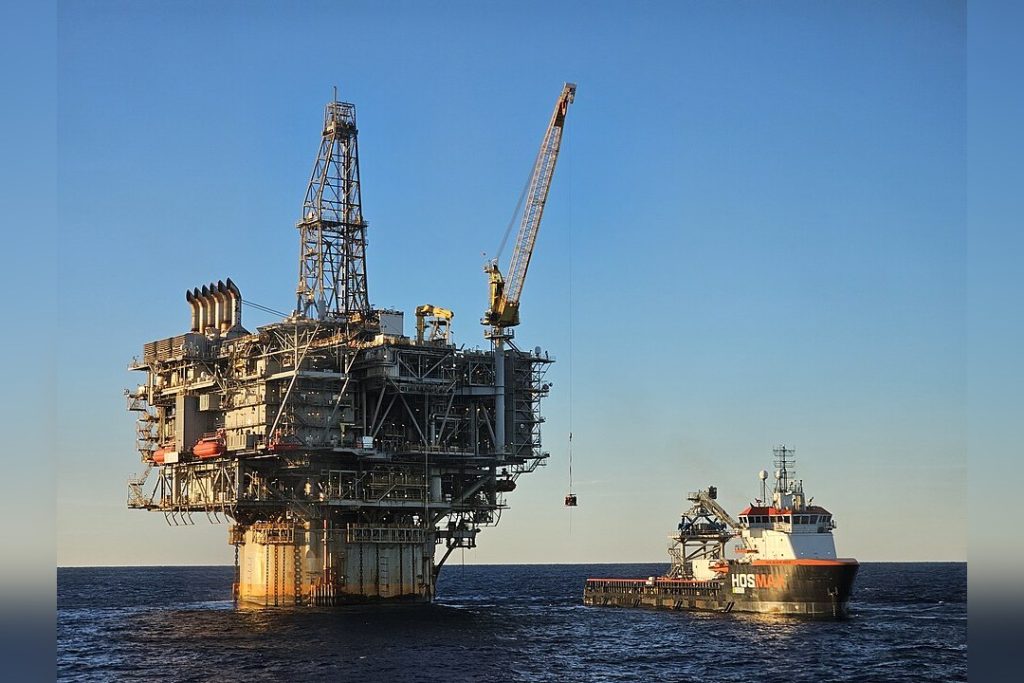
WASHINGTON, September 10 — U.S. benchmark West Texas Intermediate crude closed above $100 per barrel on Thursday, the first time it has crossed that threshold since May, as global energy markets priced in the risk of a prolonged military conflict between Iran and the United States and its allies. Brent crude, the international benchmark, rose above $105 per barrel the same day.
The record shows both benchmarks moving on the same set of facts: a series of escalating attacks in the Persian Gulf region, and traders’ concern that the conflict could disrupt shipping through the Strait of Hormuz.
The Chokepoint
Roughly 20 million barrels per day of oil and petroleum products transit the Strait of Hormuz, according to the U.S. Energy Information Administration. Approximately one-fifth of global oil consumption passes through it, making it the world’s most important oil transit chokepoint. Iran sits on the eastern shore and has previously threatened to close the Strait during periods of heightened tension.
The exposure is not limited to crude. Oil flowing through the Strait originates in Saudi Arabia, the United Arab Emirates, Kuwait, Iraq and Iran itself.
A closure would also affect liquefied natural gas from Qatar, the world’s largest LNG exporter. The last time WTI settled above $100 was in May, when supply concerns and strong demand pushed prices to multi-year highs. The last major spike above $100 came in 2022, following Russia’s invasion of Ukraine, when WTI reached $130 in March of that year.
Washington’s Options
In response to the price spike, the White House said it is considering releasing additional barrels from the Strategic Petroleum Reserve, which holds emergency crude stocks. The SPR currently holds approximately 350 million barrels, down from a peak of 727 million barrels in 2010. The U.S. Energy Department has not commented on specific release volumes.
The International Energy Agency, which coordinates releases among member countries, has not yet announced a joint action. Oil analysts warned that if the conflict widens, prices could surpass the 2008 record of $147 per barrel for WTI.
The price surge adds to inflationary pressures in the United States and globally, as higher energy costs feed into transportation, manufacturing and consumer prices. The U.S. Federal Reserve has been monitoring oil price volatility as it sets interest rates. U.S. gasoline prices have risen to an average of $3.80 per gallon, up from $3.50 a month ago, according to AAA.
Diesel prices are also climbing, adding to freight and agricultural costs.
The Wider Ledger
The International Monetary Fund has warned that a sustained $10 increase in oil prices reduces global GDP by about 0.2 percentage points. Emerging markets that rely on oil imports, such as India and Turkey, are particularly vulnerable. The U.S. dollar has strengthened as investors seek safe-haven assets, further pressuring emerging market currencies.
Gold prices have also risen above $2,000 per ounce. Stock markets in Asia and Europe fell on the news, with energy stocks outperforming.
The conflict has already led to increased military deployments in the region, with the U.S. Navy maintaining a carrier strike group in the Arabian Sea. Iran’s nuclear program remains a central concern. The 2015 Joint Comprehensive Plan of Action limited Iran’s uranium enrichment in exchange for sanctions relief, but the U.S. withdrew from the deal in 2018 and reimposed sanctions.
Iran has since enriched uranium to 60% purity, close to weapons-grade. Diplomatic efforts to revive the JCPOA stalled in 2022.
The United Nations Security Council has held emergency meetings on the crisis, but no resolution has been passed. Russia and China, both veto-wielding members, have called for restraint but have not supported sanctions against Iran. The European Union has urged de-escalation.
The situation remains fluid, and further price volatility is likely as markets assess the duration and scope of the conflict.




