KAWEMHAKAN, October 30, 2026 — In Suriname’s remote Amazon, Wayana leaders are leveraging their control of the only local airstrip to manage illegal gold mining incursions and protect ancestral lands, even as the government struggles to enforce regulations far from the capital.
The Strategic Leverage of the Kawemhakan Airstrip
The only airstrip for kilometers around sits in the middle of one of the Indigenous villages along the Lawa River, giving the Wayana chief significant practical leverage over miners and traders. Because miners have no other practical way into the forest without traveling for days by river, maintaining good relations with the community becomes essential for access. This dynamic creates a constant vying for power and influence between Indigenous leaders, miners, traders, and concession holders. Some use these relationships to secure more gold, while others seek to curb environmental degradation in an area where the Surinamese government is largely absent.
Decades of Mercury Pollution and Deforestation
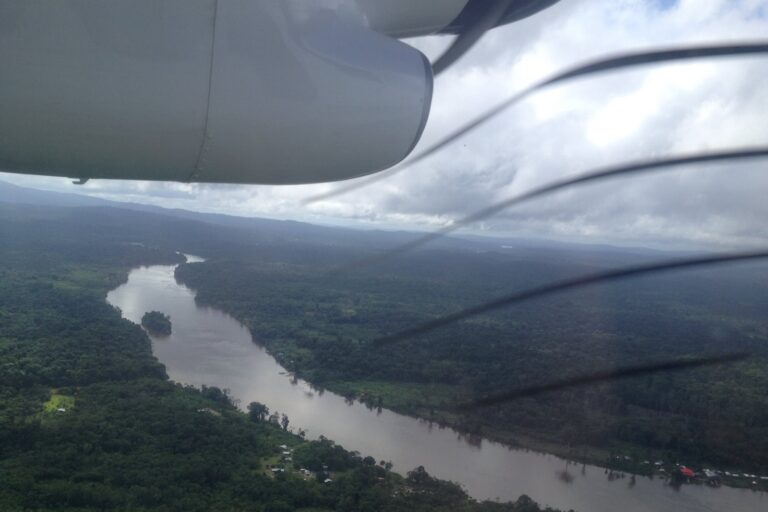
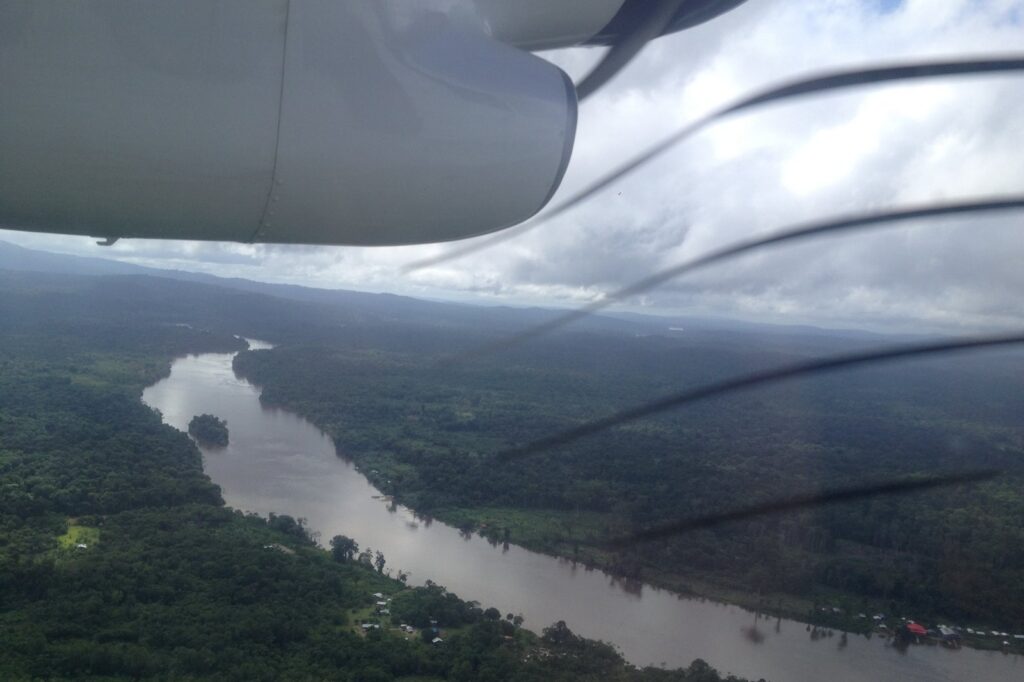
Illegal gold miners, including locals, Brazilians, and Chinese traders, have cut down forest and polluted rivers with mercury for decades along the Lawa River and its tributaries. Mining camps and trading posts established far beyond the reach of most law enforcement are sites where robberies, extortion, and other violent crimes happen out of sight. The Lawa River itself marks the border with French Guiana, a frontier where the Surinamese government’s presence is minimal, leaving Indigenous communities to manage the consequences of unregulated extraction on their own.
The Absence of Official Land Titles
Despite living in the area for generations, Indigenous Wayana communities lack an official land title that would offer legal protection against incursions. The Mulokot Foundation, an advocacy group, is working to help the Wayana improve education and map their ancestral territory. These initiatives aim to move residents beyond mining toward more sustainable activities, but until formal land rights are secured, communities remain vulnerable to the environmental and social impacts of mining operations.
Suriname’s Forest Pledge Versus On-the-Ground Reality
Suriname has pledged to maintain 90% national forest cover and combat illegal mining and mercury use, positioning itself as a country that absorbs more CO₂ than it emits. However, in the remote border regions where the government is absent, this pledge contrasts sharply with the reality of forest loss and river contamination driven by illegal mining. Archaeological research by Renzo Duin shows the Amazon rainforest has been shaped by Indigenous people for millennia, yet this historical stewardship is frequently overlooked in conservation policies. Around one million ounces of gold are extracted legally in Suriname every year, but much of the buried wealth fueling the legal industry comes from areas where informal and illegal mining persists.
Archaeological Stewardship and Historical Land Mapping
The Mulokot Foundation is actively engaged in mapping historical ecological sites within Suriname to leverage Indigenous guardianship for forest protection. This initiative builds upon two decades of field research by archaeological anthropologist Renzo Duin, who has documented densely saturated archaeological landscapes beneath the forest canopy that were previously classified as “untouched.” In 2004, Duin joined an expedition into the mountainous tri-border area where Brazil, Suriname, and Guyana meet, alongside French botanists and ecologists. While the scientific team focused on mapping biodiversity, Duin discovered the ground told a different story, rich with traces of pre-Columbian human occupation.
Duin noted that while others investigated what they perceived as pristine rainforest, he found the area dotted with fragments of pottery and other archaeological indications, including a site surrounded by a ditch. These findings reveal that the Amazon rainforest has been shaped and inhabited by people for millennia, challenging the long-dominant view of a forest solely inhabited by small tribes of nomadic hunter-gatherers. Over the years, Duin returned regularly to the region, making him one of the leading Amazon archaeologists reshaping knowledge about human occupation in the rainforest.
Despite this deep historical-ecological heritage, such research is frequently overlooked in environmental and conservation policies in the region, especially in Suriname. Although the country prides itself on being the “greenest nation on the planet” and has pledged internationally to permanently protect 90% of its forests, this preservationist approach ignores the historic presence and stewardship of Indigenous peoples. Duin explained that while archaeological knowledge has made a great stride forward in Brazil, Ecuador, and Bolivia, in Guyana, Suriname, and French Guiana, the picture of the past has improved along the coast and major rivers, yet in the inland-uplands, there has been barely any progress regarding the long-time histories of Indigenous peoples.
Chronic Enforcement Gaps in Remote Territories
The disconnect between national policy and local enforcement is most evident in the border regions where government presence remains minimal. Although Suriname prides itself on being the “greenest nation on the planet,” this preservationist approach frequently ignores the historic presence and stewardship of Indigenous peoples, according to Renzo Duin. While archaeological knowledge has made a great stride forward in Brazil, Ecuador, and Bolivia over the last three decades, progress regarding the long-time histories of Indigenous peoples in Guyana, Suriname, and French Guiana has barely scratched the surface in inland-uplands.
This lack of recognition extends to legal protections for land and resources. Despite living in the area for generations, Indigenous Wayana communities still lack an official land title that might offer some protection against incursions by outsiders. Consequently, mining camps and trading posts established far beyond the reach of most law enforcement become sites where robberies, extortion, and other violent crimes happen out of sight. The government has pledged to combat illegal mining and the industry’s use of mercury, yet these promises struggle to materialize in territories where authorities are largely absent.
Furthermore, the environmental consequences of this regulatory vacuum are severe for local populations. Many Indigenous Wayana families live on both sides of the Lawa River and face a growing list of challenges, including health issues from mercury use on their land and dwindling wildlife populations they’ve long relied on for food. While around one million ounces of gold are extracted legally in Suriname every year, much of the buried wealth fueling the legal industry comes from areas where informal and illegal mining persists unchecked by state intervention.
Sources
- Wayana
- In Suriname’s Amazon, the Wayana community struggling to keep gold miners at bay
- Suriname’s rich archaeological history may hold keys to conservation
Photo: AlexCad (CC BY-SA 3.0)