Iceland’s government is urging households to prepare for power cuts and emergencies as a standard safety measure, reinforcing a preparedness framework built around the island’s persistent geological and weather risks.
Background: A Framework Shaped by Geology
Iceland sits on the Mid-Atlantic Ridge, a tectonic boundary that makes the country geologically active with frequent volcanic eruptions, earthquakes, and landslides. The Civil Protection Department coordinates emergency preparedness across the island nation of roughly 395,000 residents. The sparse population distribution, with about 35 percent concentrated in the capital Reykjavík, creates unique challenges for emergency response coverage across the lowlands, glacial rivers, and volcanic plateau that define the interior. Regular power outages occur due to the geography and extreme weather conditions, a reality that has long made self-sufficiency a practical necessity rather than a precautionary ideal.
How It Works: The Household Mandate
The initiative centers on two pillars: material readiness and coordination. Emergency kits are recommended to include essential supplies for 72-hour self-sufficiency, a standard benchmark for bridging the gap until organized relief reaches isolated areas. In parallel, households are advised to create communication plans and identify safe meeting points, ensuring families can reconnect if standard infrastructure fails. The Civil Protection Department oversees the guidance, aligning household-level actions with the national response structure.
The Numbers: Coverage and Distribution Targets
The 72-hour supply standard applies to every home, whether in the dense capital region or in remote fishing villages where resupply lines are longest. No centralized distribution program is described; the mandate relies on household procurement guided by Civil Protection recommendations.
What It Means Now: Immediate Impact on Citizens and Logistics
For residents, the directive translates to stocking food, water, heat sources, and medical supplies sufficient for three days without grid power. The communication plan requirement addresses a recurring vulnerability: in past events, family members separated by work or school have struggled to coordinate when mobile networks congested or failed. The sparse settlement pattern means that in many districts, neighbors are the first responders, making the meeting-point protocol a practical coordination tool rather than a formality.
Key Players: Government Agencies and Emergency Services
The Civil Protection Department acts as the coordinating authority, setting the preparedness standards and disseminating guidance. Local municipalities and emergency services handle on-the-ground response, but the program’s design assumes that the first 72 hours of any major disruption will test household resilience before organized relief scales up. The framework reflects lessons from decades of managing volcanic eruptions, severe storms, and seismic events that regularly isolate communities.
What Comes Next: Timeline for Rollout and Evaluation
The government has urged households to prepare for power cuts and emergencies as a standard safety measure, embedding the 72-hour kit and communication plan into routine civic expectation rather than treating them as crisis-driven reactions.
Sources
- Iceland
- The Top 10 Worst Things about Iceland | Guide to Iceland
- How Art Stays Afloat in Iceland
- Iceland Airwaves 2026 announces final lineup – Northern Transmissions
- AltaSea and Iceland Ocean Cluster Advance Global Blue Tech Innovation – AOL
- Eik fasteignafélag hf.: Condensed Interim Financial Statement for the first nine months 2026
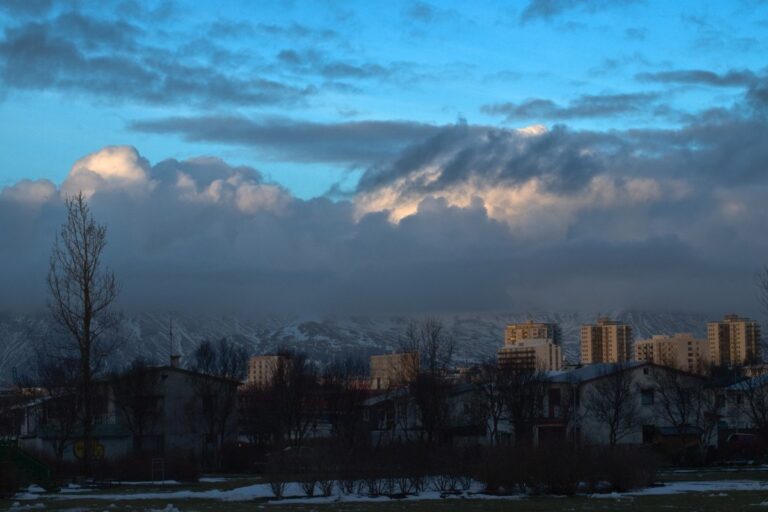
Photo: Axel Kristinsson from Reykjavík, Iceland (CC BY 2.0)