
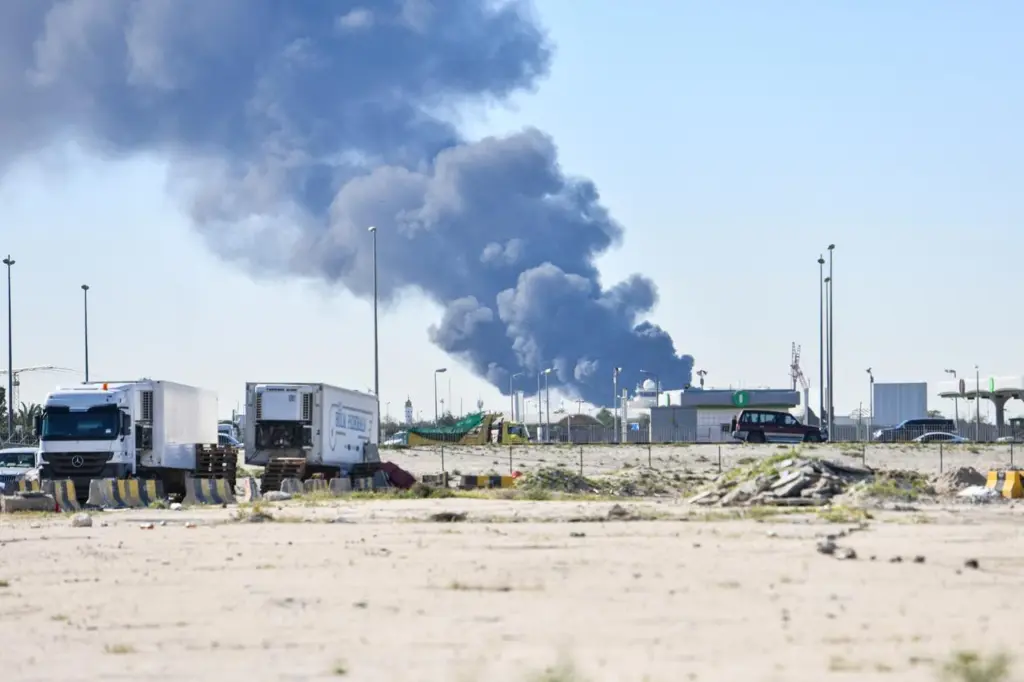
Iranian missiles and drones hit a combined power and desalination plant in Kuwait on Friday, July 17, 2026. A fire broke out and a large number of the plant’s power generation units were damaged, Kuwaiti authorities said, according to the Associated Press. The blaze was brought under control, and officials said emergency contingency plans were switched on.
Kuwait’s Ministry of Electricity, Water, and Renewable Energy said repairs to the damaged equipment were under way, the New York Post reported. Kuwait’s army also said the drone attacks injured an unspecified number of its personnel. No deaths were reported at the time.
A country that drinks from the sea
Kuwait has almost no natural freshwater. About 90% of its drinking water comes from desalination, the AP said. Oman draws roughly 86% of its supply the same way, and Saudi Arabia about 70%. Most plants pass seawater through ultrafine membranes, a process called reverse osmosis.
Hundreds of these plants line the Persian Gulf coast, all within reach of Iranian missiles or drones. Many share a site with a power station, so a strike on the electrical side can stall water production too. The chain has several stages, from intake to treatment to energy supply, and damage at any one of them can stop output.
The AP put the stakes bluntly: without the plants, major Gulf cities could not sustain their present populations. Officials in the Gulf and in Washington have long understood that if big plants went offline, some cities could lose most of their drinking water within days.
Not the first strike near a plant
The Friday attack follows others. Days after the war began with Operation Epic Fury on Feb. 28, Kuwait reported damage at its Doha West desalination plant, caused by debris from intercepted drones or attacks on the nearby port. Iran, for its part, accused the United States of hitting desalination plants on Qeshm Island on March 8, cutting water to 30 villages. Washington did not acknowledge the strike. Yemen’s Houthi rebels have also gone after Saudi desalination facilities in the past.
A 2010 CIA analysis had flagged the danger. It warned that attacks on desalination facilities could set off national crises in several Gulf states, and that outages could last months if critical equipment were destroyed. More than 90% of the Gulf’s desalinated water comes from just 56 plants, the report said, and “each of these critical plants is extremely vulnerable to sabotage or military action.”
Outside the region, the AP noted, attention on the Iran war has centered on energy prices, with fighting and ship attacks around the Strait of Hormuz pushing oil to record highs. The water systems, it said, are just as exposed.
Sources
Sources
- Google News – News about Kuwait • Iran – Overview
- Iran Strikes Kuwait Desalination Plant, Water at Risk




