
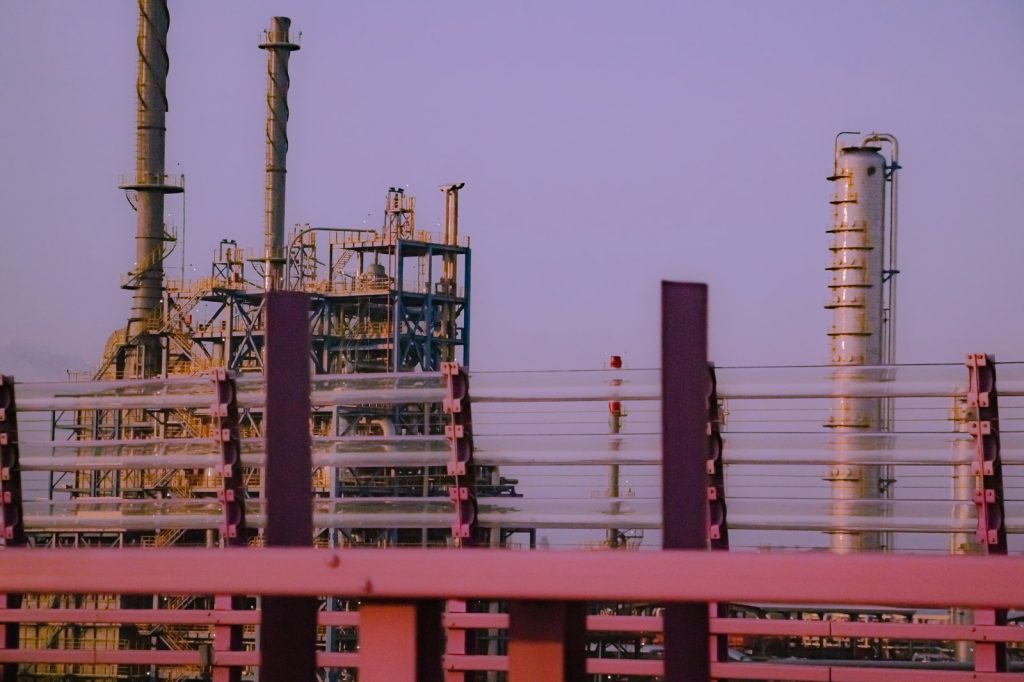
OMSK, July 7 — The Omsk Oil Refinery, Russia’s largest crude processing facility, has become a recurring target in the ongoing conflict, with officials confirming that Ukrainian drone strikes have hit the site multiple times since the invasion of Ukraine began in February 2022. The refinery, owned by Gazprom Neft, a subsidiary of the state-controlled energy giant Gazprom, processes approximately 21 million tons of crude oil per year, according to company records.
That volume represents about 7% of Russia’s total refining capacity, making the facility a critical node in the country’s energy infrastructure. The strategic importance of the Omsk refinery extends well beyond its sheer size.
Located in Siberia, the plant supplies petroleum products — including gasoline, diesel, jet fuel, and fuel oil — to both military and civilian markets across Siberia, the Far East, and Central Asia. After the invasion of Ukraine, the refinery was designated as a key supplier of fuel for Russian military operations in the eastern theater, according to available records. This shift in operational priority placed the facility squarely in the crosshairs of Ukrainian targeting strategy.
Previous strikes and persistent vulnerability
The record shows that the refinery was first struck by Ukrainian drones in August 2023. That attack caused a fire at the facility, though operations were not halted. A subsequent strike on January 25, 2024, also ignited a blaze, which officials confirmed was extinguished within hours.
While neither attack succeeded in shutting down the refinery entirely, each incident underscored the vulnerability of Russia’s energy infrastructure to long-range drone warfare. The January 2024 strike, in particular, highlighted the difficulty of defending industrial sites that span vast areas and contain numerous potential ignition points.
The Omsk refinery employs over 10,000 workers and represents a major economic asset for the Omsk region. Its disruption could have cascading effects on fuel supplies for Russian forces operating in the eastern theater, as well as on civilian markets that depend on the plant’s output. Analysts tracking the conflict have noted that sustained damage to such a facility could affect Russia’s ability to sustain its military operations over time, though the refinery has so far demonstrated resilience in restoring production after each incident.
Geopolitical and economic dimensions
The repeated targeting of the Omsk refinery fits a broader pattern of Ukrainian strikes against Russian energy infrastructure. These attacks aim to degrade the logistical backbone of the Russian military effort while also imposing economic costs on the state-controlled energy sector. Gazprom Neft, as a subsidiary of Gazprom, operates within a framework where energy revenues directly support state budgets and military expenditures.
The refinery’s output of jet fuel and diesel is particularly relevant for military logistics, as these fuels power aircraft and ground vehicles involved in operations across the eastern theater. From a regional perspective, the Omsk refinery’s role as a supplier to Siberia, the Far East, and Central Asia means that any prolonged disruption could have knock-on effects far beyond the battlefield.
Civilian fuel markets in these regions rely on the plant’s steady production, and alternative supply routes are limited by the vast distances and sparse infrastructure of Siberia. The economic significance of the refinery to the Omsk region itself is substantial, with the facility providing thousands of jobs and supporting local businesses through its supply chain.
Looking ahead
As of July 2026, the Omsk refinery continues to operate, though the security environment around it remains tense. The pattern of previous strikes suggests that Ukrainian forces view the facility as a legitimate military target, and the Russian military has responded by reinforcing air defenses around critical energy sites. Whether the refinery can maintain its production levels in the face of continued drone threats will depend on the effectiveness of these defensive measures and the resilience of its industrial systems. For now, the plant remains a strategic asset whose fate is closely tied to the broader trajectory of the conflict.




