
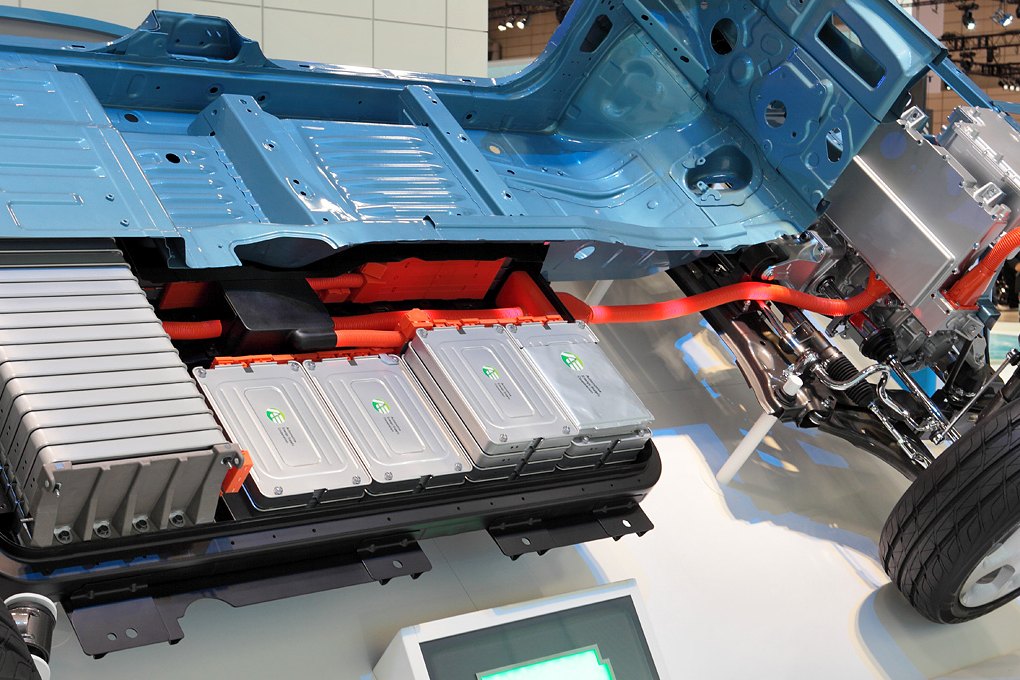
TORONTO, July 14 — Li-Cycle has spent years solving one of the more awkward technical problems of the energy transition: what to do with a lithium-ion battery when it dies. The answer, under the hood, is a patented hydrometallurgical process the company calls “Spoke & Hub,” and it recovers over 95% of the lithium, cobalt, nickel and manganese from spent cells. The company was co-founded in 2016 in Toronto by Ajay Kochhar, a Canadian chemical engineer who now serves as its CEO.
Kochhar, born in 1984, holds a B.A.Sc. in Chemical Engineering from the University of Waterloo (2007) and an M.A.Sc. in the same discipline from the same institution (2009). He was recognised as a Young Global Leader by the World Economic Forum in 2022.
The technical reality of recycling
The detail that matters is the recovery rate. Most conventional recycling processes for lithium-ion batteries have historically struggled to economically reclaim the lithium itself, often sacrificing yield for speed. Li-Cycle’s hydrometallurgical approach — using aqueous chemistry rather than high-temperature smelting — is designed to pull out over 95% of the critical metals.
That includes cobalt, nickel, manganese and, crucially, lithium. The company’s “Spoke & Hub” model is a deliberate piece of logistics engineering.
Spokes are preprocessing facilities that safely discharge, dismantle and shred batteries into a black mass. That black mass is then shipped to a central hub for the hydrometallurgical refining. As of 2023, Li-Cycle operates multiple spokes across North America and Europe.
The Rochester hub and the SPAC route
The centrepiece of the strategy is the company’s hub in Rochester, New York. That facility, expected to begin operations in 2024, is designed to process 35,000 tons of black mass annually. It is the largest single commitment Li-Cycle has made to scaling its technology from demonstration to industrial throughput.
Li-Cycle went public via a SPAC merger in August 2021, raising $615 million. It was a familiar path for cleantech companies at that moment — a fast route to public markets without a traditional IPO roadshow — but the capital gave the company the runway to build the Rochester hub and expand its spoke network.
Partners include Glencore and LG Chem, two names that signal the industrial seriousness of the venture. Glencore brings commodity trading and mining heft; LG Chem brings direct access to the battery manufacturing supply chain. What to watch next is whether the Rochester hub hits its 2024 operational target and whether the 35,000-ton annual capacity proves to be the floor or the ceiling.
For a company that started in Toronto eight years ago with a chemical engineering thesis turned into a business, the next few quarters will show whether the hub-and-spoke model can scale to match the sheer volume of batteries heading for end-of-life.




