
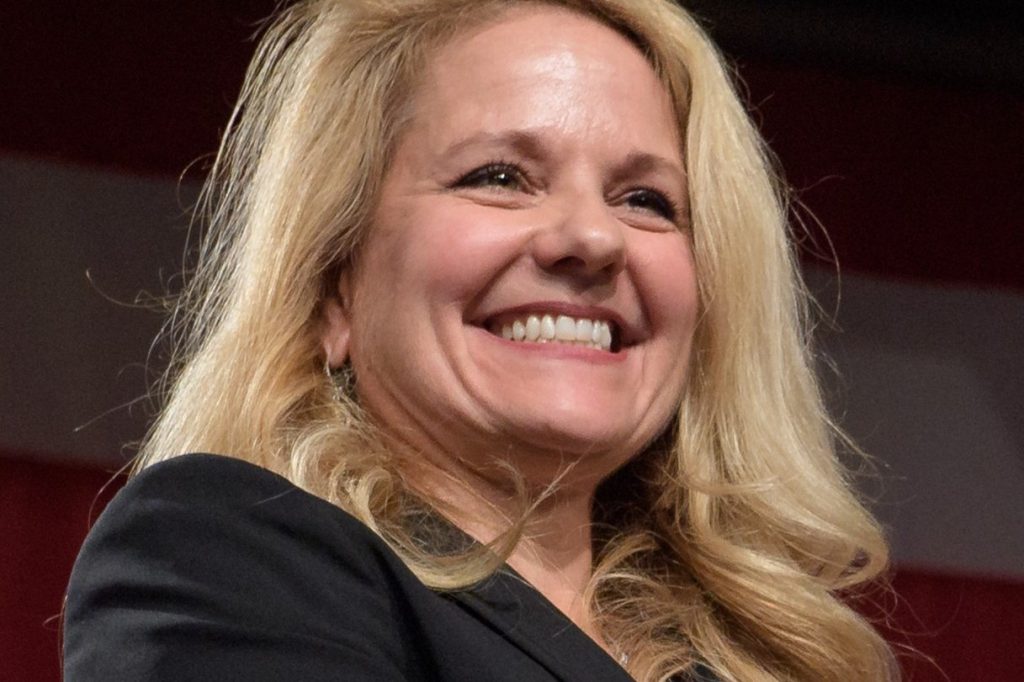
Gwynne Shotwell, president and chief operating officer of SpaceX, has spent more than two decades translating ambitious aerospace concepts into routine launch operations. Since stepping into her current role in 2008, she has overseen the company’s daily execution, managing launch schedules, customer contracts, and government relations from the company’s headquarters in this Los Angeles suburb. Shotwell, born November 23, 1963, in Evanston, Illinois, earned both a bachelor’s and a master’s degree in mechanical engineering from Northwestern University.
She joined SpaceX in 2002 as vice president of business development, when the company was still a relatively untested newcomer in the aerospace industry. Her steady leadership has helped convert what many regarded as a high-risk venture into a trusted launch partner for some of the world’s most demanding customers, including NASA and the U.S. Department of Defense.
Operational leadership and contract growth
Under Shotwell’s operational oversight, SpaceX has secured contracts with NASA, the U.S. Department of Defense, and a range of commercial clients. She played a central role in the development and success of the Falcon 9 and Falcon Heavy rocket programs, as well as the ongoing deployment of Starlink, the company’s satellite internet constellation.
Early results from these projects indicate a methodical expansion of capabilities rather than a rushed market push. In 2020, Shotwell was named to the Time 100 list, a recognition of her influence in the field. Her estimated net worth of $1 billion reflects the company’s growth and her central role, though colleagues describe her focus as being on the work itself rather than personal financial rewards.
The company’s trajectory shows how engineering breakthroughs can reshape an entire industry—and how leadership choices shape that transformation. SpaceX’s reusable rocket stages have reduced the need for new hardware on each flight, altering the economics of space access.
The growth of Starlink has also accelerated demand for launch services while driving discussions about orbital traffic management and spectrum allocation.
Advocacy and regulatory reform
Beyond day-to-day engineering and business demands, Shotwell has also been a vocal advocate for regulatory reform and the broader commercialization of space. She has argued that outdated rules can slow innovation and that a more streamlined approach could help the industry move faster. In public remarks, she has suggested that companies and agencies relying on SpaceX should talk to their government representatives about the importance of modernizing space policy.
Her approach is one of cautious optimism. She does not promise a future of effortless space travel, but rather one built on careful engineering, clear contracts, and steady execution.
The encouraging part for the industry is that this method appears to be working, with a full manifest of launches and a growing customer base.
SpaceX’s transformation and industry impact
SpaceX began in 2002 with a single goal: to reduce spaceflight costs and open a new era of reliable, reusable rockets. The company was founded by Elon Musk after earlier aerospace efforts convinced him that commercial launch services could outpace government-led programs in speed and affordability.
Before SpaceX, most orbital launches relied on government-developed rockets or older commercial designs that had not changed substantially since the Cold War era. Early skepticism greeted the idea that a private company could build heavy-lift rockets or compete with established aerospace contractors. Yet by the mid-2000s, SpaceX had begun flight tests of the Falcon 1, proving that smaller payloads could reach orbit using a privately funded, liquid-fueled launcher.
The company’s breakthrough came in 2008 when the Falcon 1 succeeded after earlier failures, followed in 2010 by the first launch of the larger Falcon 9. Those milestones marked the shift from experimental engineering to operational spaceflight.
SpaceX’s engineers focused on staged combustion engines and controlled landings, technologies explored in earlier decades but never scaled for routine use. Over time, SpaceX expanded from launching satellites to sending cargo to the International Space Station and later developing crew-capable spacecraft. The company also began deploying large satellite networks for global internet access, reshaping how broadband connectivity could reach remote regions.
Today, SpaceX has become a primary launch provider for NASA’s science and exploration missions, a supplier for national security payloads, and a service provider for commercial operators. As the company continues to expand its Starlink constellation and prepare for more ambitious missions, Shotwell’s role will remain central.
For anyone watching the space sector, the advice is simple: keep an eye on the operations chief who makes the big ideas fly.




