
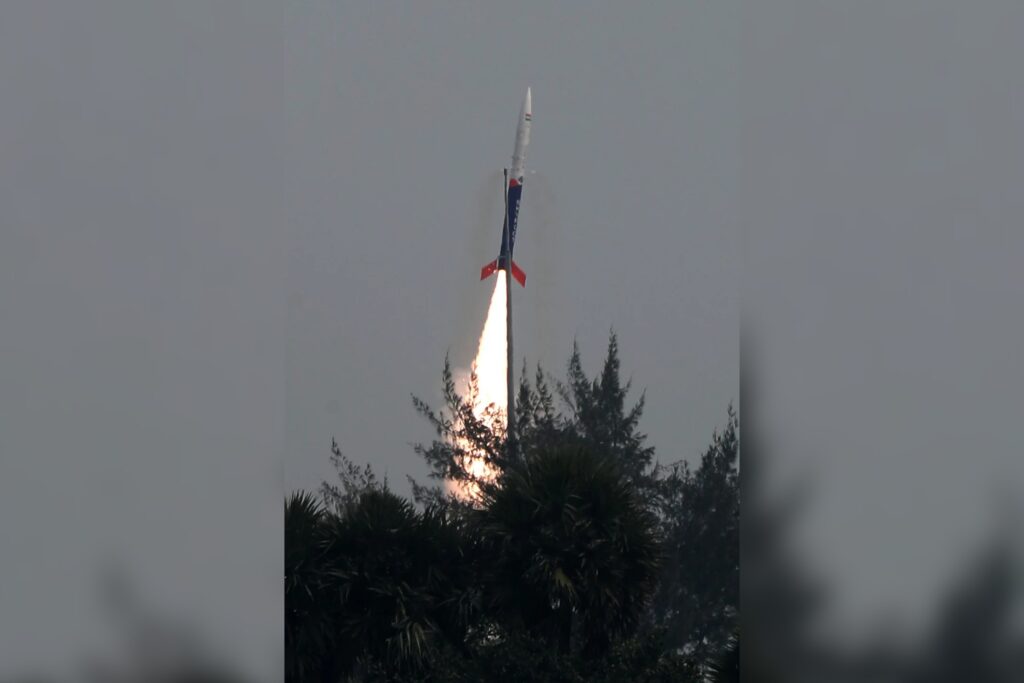
NEW DELHI, July 17 — India’s space sector, long the preserve of a single government agency, is undergoing a quiet transformation that will reach a notable milestone this week. On July 18, the private startup Skyroot Aerospace is scheduled to launch its Vikram-1 rocket from the Satish Dhawan Space Centre in Sriharikota, a facility that has been operated by the Indian Space Research Organisation since 1971. The launch, it would seem, is a direct result of policy changes announced by Prime Minister Narendra Modi’s government in 2020.
For decades, the Indian Space Research Organisation, founded in 1969, dominated all space activities in the country. The 2020 reforms changed that.
They established the Indian National Space Promotion and Authorization Centre, or IN-SPACe, as a single-window agency to authorise private space activities. At the same time, the government created NewSpace India Limited, a commercial arm of ISRO, to handle the business side of the state-run agency’s work. The salient point is that these changes allowed startups like Skyroot Aerospace to develop and launch their own rockets.
The reforms also permitted private companies to use ISRO’s facilities, including the launch pad at Sriharikota, which sits on the coast of Andhra Pradesh. For all the noise about India’s ambitions in space, the practical effect has been a gradual opening of a sector that was, until recently, closed to private competition.
The Vikram-1 launch
Skyroot Aerospace’s Vikram-1 rocket is scheduled for launch on July 18, 2025. The company is one of several Indian startups that have emerged since the reforms, but it has moved faster than most toward an orbital launch. The rocket is named after Vikram Sarabhai, the physicist widely regarded as the father of India’s space programme.
The launch will take place at the Satish Dhawan Space Centre, a facility that ISRO has operated for more than five decades. It is not the first private launch from Indian soil, but it represents a concrete outcome of the policy changes that began five years ago.
The government’s decision to let private companies use state-owned infrastructure has been central to this shift.
What the reforms changed
Before 2020, the Indian space sector was effectively a monopoly. ISRO designed, built, launched and operated everything. The reforms introduced by the Modi government created a regulatory framework for private participation.
IN-SPACe now acts as the gatekeeper, approving private missions and ensuring they meet safety and regulatory standards. NSIL, the commercial arm, handles the sale of ISRO’s services and technology to private and foreign customers.
The changes were not universally welcomed at first. Some within ISRO were reportedly uneasy about sharing facilities and expertise with potential competitors. But the government pressed ahead, arguing that private companies could help expand India’s share of the global space market, which is dominated by American firms like SpaceX and European players like Arianespace.
Looking ahead
The Vikram-1 launch on Friday will be watched closely, not just by the Indian space industry but by international observers. If successful, it will demonstrate that India’s private sector can develop and launch orbital rockets, a capability that few countries outside the United States, Russia and China possess. The broader question is whether the reforms will produce a sustainable private space industry in India.
Several other startups, including Agnikul Cosmos and Bellatrix Aerospace, are developing their own launch vehicles and satellite technologies. For all the noise about India’s space ambitions, the Vikram-1 launch is the most tangible test yet of whether the 2020 policy changes can deliver results.




