
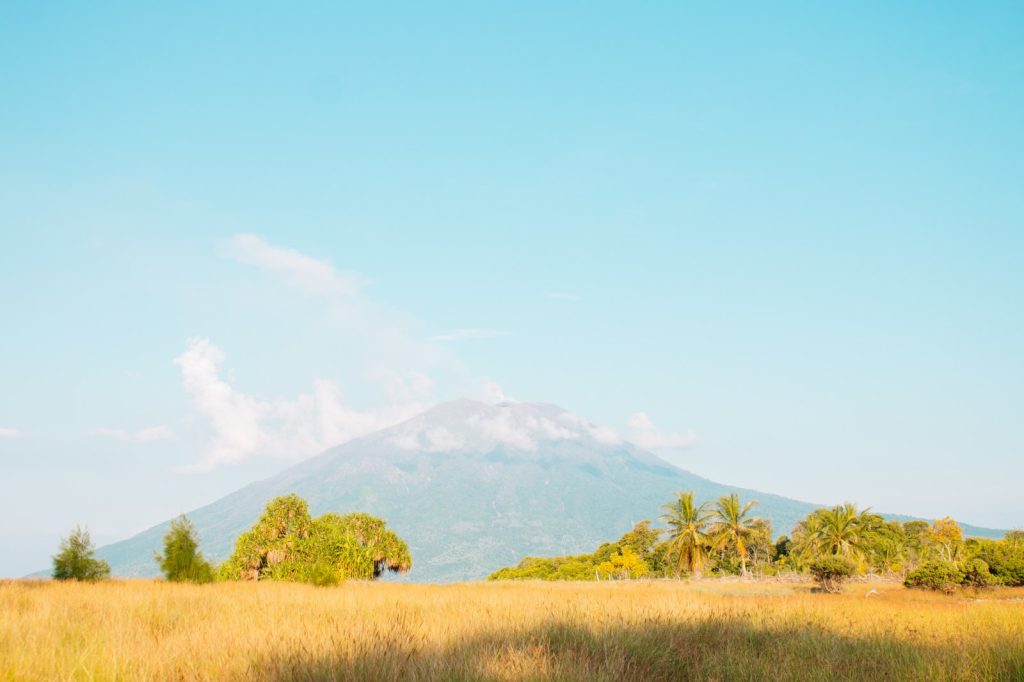
Some volcanoes announce themselves with one enormous blast. Mount Ile Lewotolok has taken the opposite approach: an almost machine-gun cadence of eruptions that is staggering in sheer count. On the island of Lembata in East Nusa Tenggara, this broad stratovolcano recorded a scarcely believable 1,873 eruptions in just five days, from September 1 to 5, 2026 — a rate that has kept its communities under a near-constant rain of ash.
Nearly 1,900 eruptions in five days
The numbers describe a volcano in a sustained, highly active phase. Individual explosions have thrown ash and incandescent material 200 to 700 meters above the summit, again and again, hour after hour. No single one of these bursts is catastrophic on the scale of a Krakatau or a Lewotobi, but their relentlessness is its own kind of hazard: ash accumulates on roofs, chokes farmland, contaminates water, and wears on the health of people who cannot escape breathing it day after day.
The quieter, grinding danger
Ile Lewotolok’s style is what volcanologists call Strombolian to Vulcanian — frequent, moderate explosions rather than a single paroxysm. That makes it less likely to produce a sudden regional disaster, but the cumulative toll matters. Prolonged ashfall damages crops and livestock, and fine ash is a respiratory hazard, especially for children and the elderly. On a small island with limited shelter, weeks of continuous eruptions become a slow-burning emergency that rarely makes global headlines the way an aviation shutdown does.
What experts are watching
At Ile Lewotolok, PVMBG monitors the frequency and energy of the explosions, the height of the ash, and any change in eruptive style that might signal escalation. A shift from many small bursts toward fewer but larger explosions, or the appearance of pyroclastic flows, would be the warning signs of a more dangerous phase. Seismic tremor and gas output help scientists judge whether the system is simply venting steadily or building toward something bigger.
What to watch for
An exclusion zone is enforced around the crater, and residents are urged to wear masks, protect water supplies, and clear ash from roofs before it grows heavy enough to cause collapse. For the wider public, the indicators are the alert level and any reported change in the character of the eruptions. Ile Lewotolok is a case study in a truth that gets lost in disaster coverage: a volcano does not have to explode spectacularly to upend thousands of lives. Sometimes the hazard is simply that it will not stop.
Sources
- Lembata's Ile Lewotolok erupts 1,873 times over five days
- Ile Lewotolok Records 1,873 Eruptions in Five-Day Observation




