
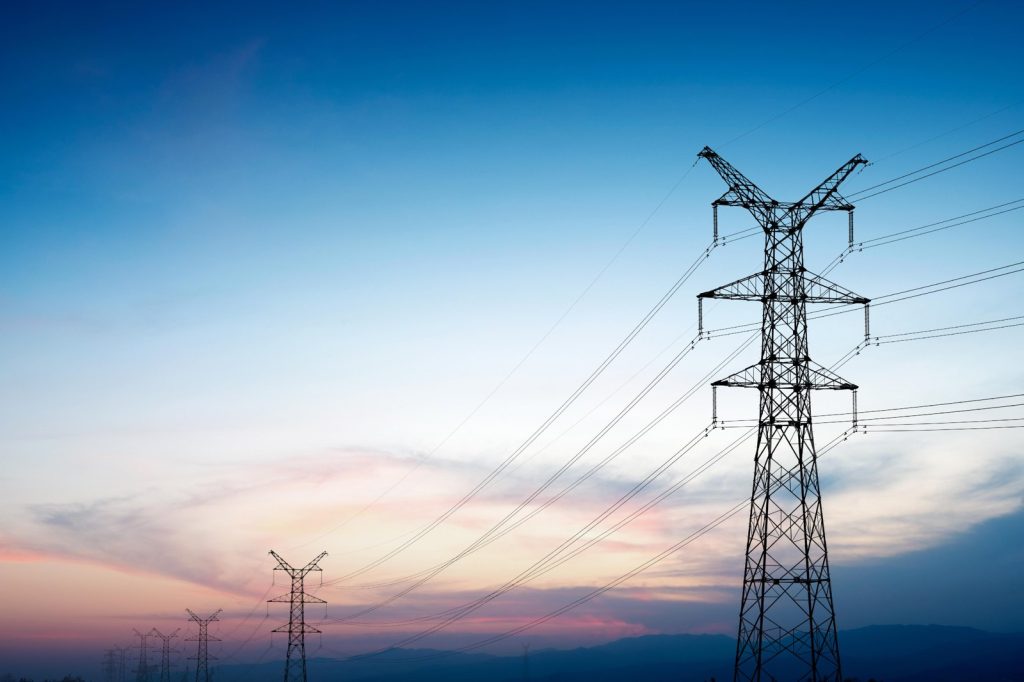
VALLEY FORGE, Pa., July 21 — PJM Interconnection, the operator of America’s largest power grid, is facing a supply-demand squeeze that signals a strategic inflection point for electricity markets across the eastern United States. The 67 million customers served by PJM across all or parts of 13 states and the District of Columbia will be watching how the regional transmission organization navigates what its own data show is a fundamental shift in the calculus of power supply.
After nearly two decades of flat electricity demand from 2005 to 2020, PJM is now anticipating 5% annual growth — driven overwhelmingly by the build-out of new data centers. That demand surge collides with supply constraints: numerous generation plants have shut down for environmental or economic reasons, and permitting new power plants has become a prolonged, often litigious process.
The resulting supply-demand imbalance is expected to directly influence PJM’s wholesale electricity auctions, which set the prices that ultimately flow through to consumer rate changes across the entire footprint. The broader stakes are clear: a grid that reliably powers homes, hospitals, and a rapidly expanding digital economy now faces a tightening of its fundamental arithmetic.
The Scale of PJM
Headquartered in Valley Forge, Pennsylvania, PJM is a regional transmission organization (RTO) that operates the largest competitive wholesale electricity market in the United States — and was the world’s largest until the European Integrated Energy Market took shape in the 2000s. Its infrastructure is staggering: 182 gigawatts of generating capacity, 1,436 electric power generators, 88,333 miles of transmission lines, and more than 800 terawatt-hours of electricity delivered in 2024 alone. More than 1,000 companies are members of PJM.
The power pool itself dates to 1927, when Public Service Electric and Gas Company, Philadelphia Electric Company, and Pennsylvania Power & Light Company formed the Pennsylvania-New Jersey Interconnection to dispatch plants on a lowest-cost basis — a cooperative model that predates modern regulatory structures. In 1956, Baltimore Gas and Electric Company and General Public Utilities joined, and the pool was renamed the Pennsylvania-New Jersey-Maryland Interconnection.
Today, PJM is regulated by the Federal Energy Regulatory Commission (FERC), which approves its open access transmission tariff for the wholesale market. What this signals now is a shift from a period of ample reserve margins and flat demand to one where capacity planning has become the central strategic challenge.
A New Demand Calculus
For strategists watching the U.S. energy landscape, the numbers are jarring. From 2005 to 2020, PJM saw essentially no net growth in electricity demand. Efficiency gains, industrial decline, and modest economic expansion produced a flat line.
Then came the data center boom. The 5% annual growth PJM now projects is driven overwhelmingly by facilities that house the servers powering cloud computing, artificial intelligence, and cryptocurrency mining — loads that can equal the consumption of a small city per facility.
On the supply side, the environment has shifted in the opposite direction. Many coal-fired units have retired under environmental regulations and market economics. Nuclear plants that once provided baseload power have been shuttered in some states.
Natural gas plants face both regulatory hurdles and financing uncertainties. And the difficulty of timely permitting for new generation — whether solar, wind, gas, or nuclear — means that even when developers want to build, years of approvals lie ahead.
The combination of surging demand and constrained supply changes the strategic calculus for PJM’s capacity auctions, which are designed to ensure there is enough generation available to meet peak demand years in advance. Those auctions set the wholesale price for capacity — essentially the price that generators are paid to be ready to produce electricity — and those costs flow into the rates paid by households and businesses.
What This Means for Consumers and Policymakers
The supply-demand imbalance does not yet constitute an immediate crisis, but the direction of travel is unambiguous. PJM’s own projections point to a tightening reserve margin. Higher capacity auction clearing prices are expected — and those prices will ripple into the retail electricity bills of the 67 million customers across PJM’s territory, from Chicago to Washington, D.C., from northern Michigan to central North Carolina.
State regulators, consumer advocates, and industrial energy users are already scrutinizing the upcoming auction results. The Federal Energy Regulatory Commission, which oversees PJM’s tariff, will face pressure to ensure that market rules allow for adequate supply while mitigating price spikes.
The broader geopolitical context — the United States’ push to expand domestic semiconductor manufacturing, electrification of transportation, and AI infrastructure — all rests on the reliability and cost of the underlying power grid. Strategically, PJM sits at the crossroads of America’s energy transition and its technology-driven economic ambitions. The next capacity auction will be a critical test of how this imbalance translates into prices — and whether the market mechanism can deliver the generation needed to keep the lights on for tens of millions of Americans.




