
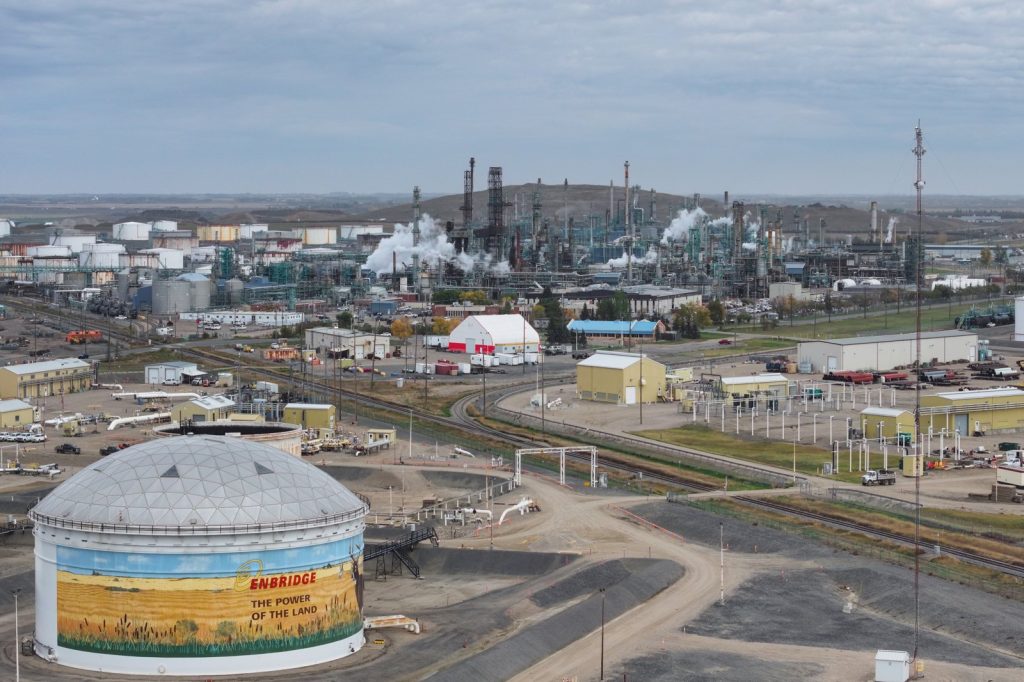
OMSK, Siberia — The idea that Siberia’s vastness offered a natural shield from conflict is quietly slipping away. For decades, the Omsk Oil Refinery sat deep in the Russian interior, a massive industrial anchor far from any frontline. A drone strike on January 25, 2024, changed that calculus, proving that even Russia’s largest refinery is no longer out of range.
The facility, commissioned in 1955 and owned by Gazprom Neft, a subsidiary of Gazprom, is a behemoth. It processes 21 million tons of crude oil annually, accounting for about 6% of the country’s total refining capacity.
That scale makes it the largest refinery in Russia by processing capacity, and its output—gasoline, diesel fuel, jet fuel, fuel oil, and lubricants—flows directly into the fuel supply for Siberia and the Russian Far East. It is not just an economic asset; its role in supporting domestic fuel markets and military logistics gives it a clear strategic dimension. The January 2024 strike caused a fire at the site, though no casualties were reported.
Operations were partially disrupted. The attack itself was a signal: the distance from Ukraine that once made Omsk feel like a safe haven no longer guarantees immunity.
The refinery’s location deep in Siberia had previously been considered a safe distance from the conflict. That assumption now looks fragile.
A workforce and a modernization push
The refinery employs over 10,000 workers, a figure that underscores its centrality to the local economy and to Russia’s fuel infrastructure. During the 2010s, the facility underwent modernization programs aimed at increasing efficiency and meeting environmental standards. Those upgrades were part of a broader push to bring older Soviet-era refineries up to contemporary benchmarks, but the question now is how much of that momentum can survive in an environment where physical security is no longer a given.
The shift is real. A facility that was designed and built in the mid-20th century, deep in the Siberian interior, is now operating under a new set of pressures.
The drone strike did not shut the refinery down, but it exposed a vulnerability that the plant’s planners in 1955 could not have anticipated. The trend underneath is straightforward: critical energy infrastructure across Russia is being tested in ways that were not part of the original design specifications.
What’s changing for Russian fuel supply
Omsk’s output is not a small piece of the puzzle. With 6% of national refining capacity concentrated at a single site, any sustained disruption would ripple through the fuel supply chains that serve Siberia and the Russian Far East. The refinery’s products are not just for civilian use; the plant’s role in supporting military logistics ties its operational status directly to broader strategic calculations.
The January 2024 incident was a single event, and operations were only partially disrupted. But the fact that a drone reached a target so far from the conflict zone suggests that the parameters of risk have shifted.
Watch this space. The security calculus for Russia’s deep interior refineries is no longer what it was, and the consequences for fuel supply, military logistics, and regional stability are still unfolding.
Sources
- Russia's Largest Oil Refinery Halts Production After Drone Attack …
- Ukraine’s General Staff confirms strike on Omsk Oil Refinery nearly…




