
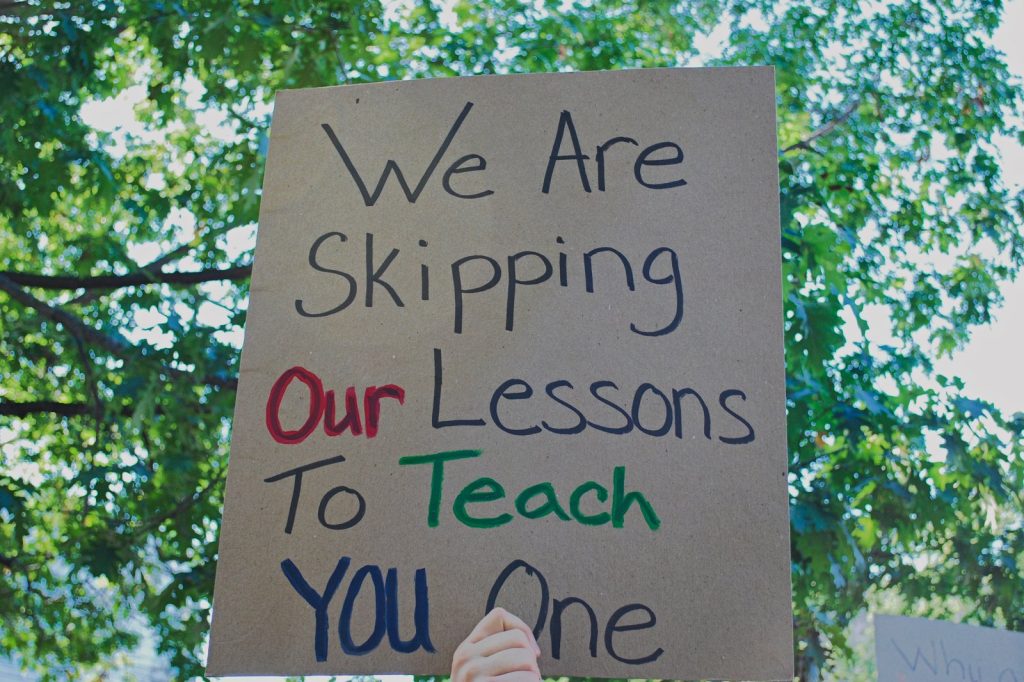
A growing cohort of analysts and educators contends that the worldwide struggle against climate change has long been driven by a “hardware-first” outlook, prioritizing renewable energy installations and electric vehicles while neglecting a potentially transformative lever: climate education. According to this argument, education systems are uniquely positioned to reshape long-term emissions trajectories by re-tuning human behavior, shifting consumption patterns, and fostering a form of civic engagement that citizens can wield to hold institutions accountable.
The mechanism is straightforward, but implementing it requires a fundamental rethinking of how countries prepare their populations for a warming world.
India’s Education System and the Green Jobs Mismatch
In India, the world’s most populous democracy, the gap between educational offerings and the demands of a green economy is stark. The institutions charged with cultivating a green workforce remain mired in abstract, rote-based environmental education that is mostly disconnected from real-world challenges.
Although a majority of Indians recognize that climate change poses a serious menace, very few possess the systemic literacy needed to alter their lifestyles or professional outputs in a way that meaningfully reduces emissions. This disconnect has deep roots in a region with a long history of human occupation. Settled life began in the Indus river basin, eventually giving rise to the Indus Valley Civilization.
Over the centuries, the subcontinent saw the emergence of Hinduism, Buddhism, and Jainism, and later experienced economic expansion under the Mughal Empire. British rule began in 1858 after the East India Company had already steered the region toward a colonial economy.
India gained independence in 1947. Now, the nation confronts a mismatch between its educational framework and the needs of a modern green workforce, making the transition to a sustainable economy difficult for both students and professionals.
Climate Literacy as Social Infrastructure
Proponents of climate education as a core mitigation measure argue that embedding climate literacy into the foundation of schooling amounts to an investment in social infrastructure. A climate-literate populace, they reason, becomes a vast, decentralized carbon reduction engine. Citizens who understand how the crisis works can make rational decisions about energy use, support circular economies, and generate less waste.
Yet in India, climate education has long been confined to a designated period for Environmental Studies, limiting its reach and impact. The government, advocates say, should mainstream climate literacy across all academic disciplines to produce tangible change.
Economics students, for instance, ought to be computing carbon taxes and social costs of emissions. Engineering students should be learning lifecycle analysis of products and infrastructure. History students could explore how resource management and the decline of past civilizations are interrelated.
The corporate perspective, however, remains the least considered stakeholder in this learning ecosystem. Businesses that will hire graduates and drive green innovation are rarely consulted in curriculum design, a gap that further widens the divide between education and the green jobs market.
The basic argument is that making climate literacy the bedrock of education is not merely an academic exercise but a practical strategy for long-term emissions reduction. With most citizens already convinced that climate change is a threat, the missing piece is the systematic knowledge to turn that awareness into action. Closing that knowledge gap, experts suggest, could redefine how India and other nations approach climate mitigation, moving beyond a hardware-first mentality to a more holistic strategy that equips every learner to contribute to a sustainable future.




