
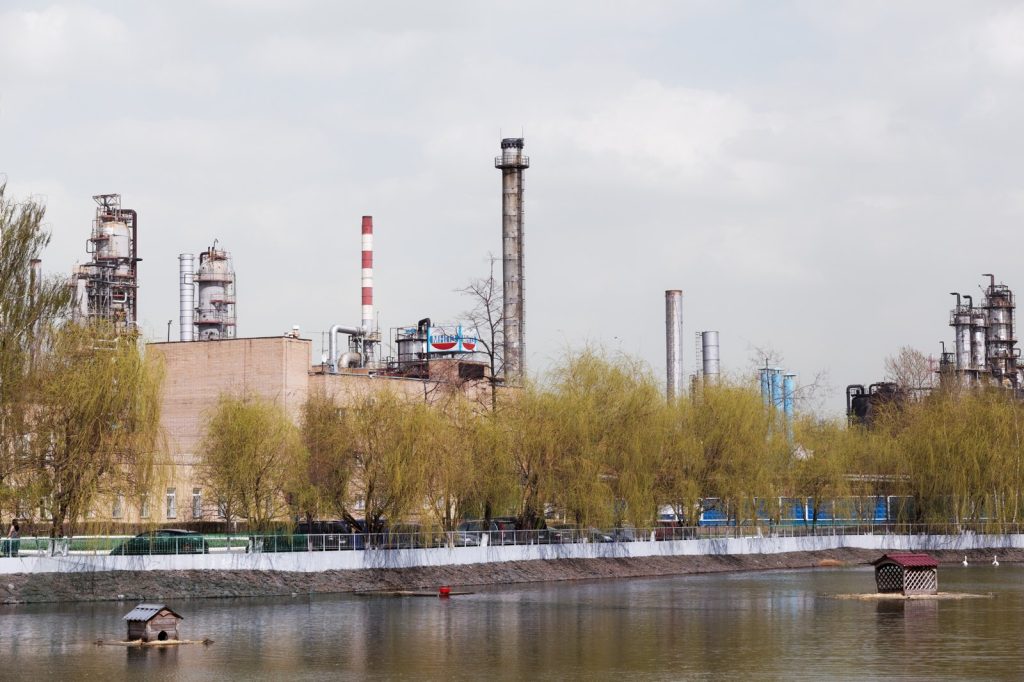
MOSCOW, July 7 — Russia’s oil sector, which supplied approximately 30 percent of federal budget revenues in 2023 according to the International Energy Agency, continues to operate under the weight of Western sanctions and shifting global trade patterns. The figures from the IEA underscore the central role the industry plays in financing state expenditures even as external pressures mount. The Omsk Refinery, one of the country’s largest processing facilities, handles 21 million tons of crude annually.
Analysts estimate the market value of its refined products at between $10 billion and $15 billion per year. A prolonged shutdown at such a facility would reduce both domestic fuel supply and export capacity.
However, the record shows that a strike on January 25, 2024, caused only a temporary fire, and operations resumed quickly. Previous drone strikes on refineries, including the Tuapse Refinery in December 2023, caused minor disruptions as well.
Sanctions and price caps reshape trade flows
Western sanctions and the price cap mechanism, imposed by the G7 and the European Union in December 2022, have altered the landscape for Russian crude exports. The price cap of $60 per barrel on Russian crude has reduced revenues, according to available data. Moscow has responded by redirecting exports to China and India.
Russia’s oil exports in 2023 averaged 7.5 million barrels per day, down from 8.3 million in 2022. The decline reflects both the sanctions regime and operational adjustments.
The broader economic impact includes increased insurance costs for Russian oil shipments and higher operational expenses for security. The shift in trade routes has been significant. Before the sanctions, European buyers accounted for a substantial share of Russian crude sales.
Now, with the price cap in place and European imports sharply reduced, Moscow has built new logistics chains to serve Asian markets. Chinese and Indian refiners have stepped in as major customers, often purchasing at discounts relative to global benchmarks.
Operational resilience under pressure
Despite the sanctions and occasional drone strikes, the Russian oil industry has demonstrated a degree of operational resilience. The Omsk Refinery’s quick recovery after the January 2024 incident is one example. The Tuapse Refinery incident in December 2023 similarly caused only minor disruptions, the record shows.
Still, the cumulative effect of higher insurance premiums and security costs is eating into margins. Shipping Russian crude now requires additional layers of compliance and risk management, which add to the expense.
These costs, while not crippling, represent a steady drain on the sector’s profitability. The price cap mechanism, which allows Western insurers and shipping services to handle Russian oil only if it is sold at or below $60 per barrel, has created a two-tier market. Russian crude often trades below the cap, but the administrative burden of proving compliance has slowed some transactions.
Moscow has sought to build its own insurance and shipping capacity to bypass these restrictions, but progress has been uneven.
Budgetary implications and strategic outlook
The 30 percent contribution of oil revenues to the federal budget in 2023 highlights the sector’s fiscal importance. Any sustained reduction in export volumes or prices would directly affect the government’s ability to fund spending programs, including defense and social outlays. The budget for 2024 was drafted with conservative oil price assumptions, but the actual trajectory remains uncertain.
Looking ahead, the key variables are the durability of the price cap regime, the willingness of China and India to maintain their current levels of Russian crude purchases, and the outcome of any further drone strikes or other disruptions. The IEA data provides a baseline, but the situation remains fluid.
Officials have not publicly forecast a major change in the near term, but the strategic context suggests continued pressure on Russian oil revenues as long as Western sanctions remain in place.




