
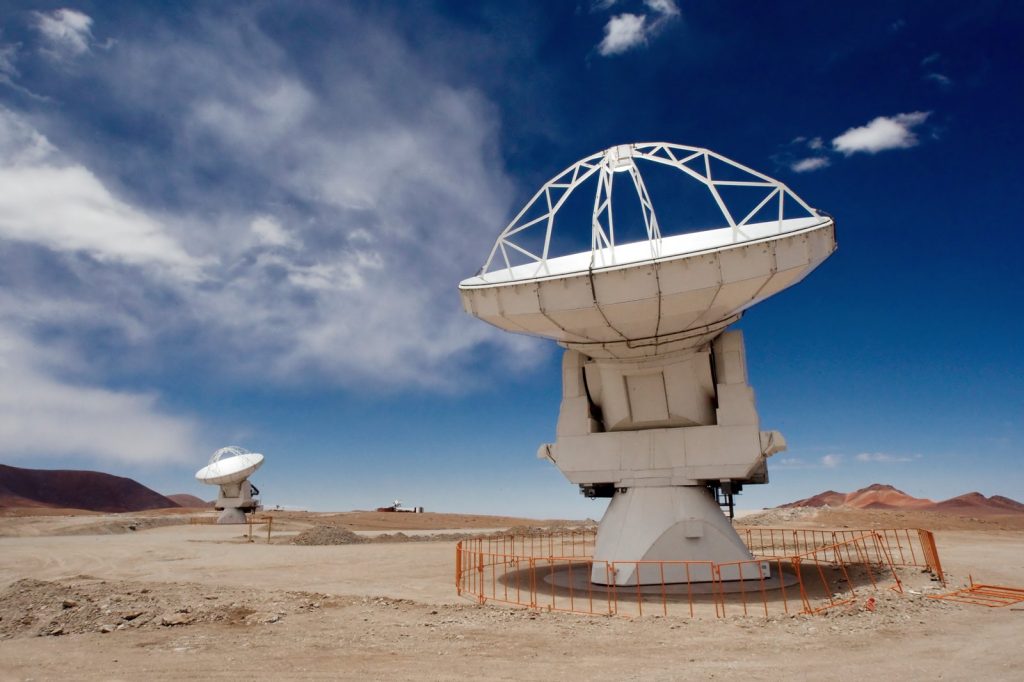
ROME, July 13 — For researchers who spend their days asking how life began, a new discovery in the cold vastness of space feels like a gift from the past. Scientists have detected glycolaldehyde, the simplest possible sugar molecule, in interstellar gas clouds for the first time. It is a finding that adds a powerful new clue to one of science’s oldest questions: how did the building blocks of life arrive on Earth?
The molecule itself is tiny. Glycolaldehyde is made of just two carbon atoms, four hydrogen atoms, and two oxygen atoms.
But its simplicity belies its importance. It is a key intermediate in the formation of ribonucleic acid, or RNA, a molecule essential for life. RNA plays a central role in protein synthesis, and many scientists believe it may have been the first self-replicating molecule on Earth, a concept known as the RNA world hypothesis.
What makes this detection so significant is that glycolaldehyde can react with other molecules to form ribose, the sugar backbone of RNA. The molecule had been found before in meteorites that fell to Earth, but this is the first time it has been identified in interstellar gas clouds themselves.
The implications reach back billions of years. The discovery supports the idea that complex organic molecules can form in space, not just on planets. During a period known as the Late Heavy Bombardment, approximately 4.1 to 3.8 billion years ago, comets and meteorites pelted the early Earth.
If those space rocks carried glycolaldehyde and other organic compounds, they may have delivered the raw ingredients for life directly to our planet’s surface. For the team behind the detection, the work is far from over. Finding glycolaldehyde in interstellar gas clouds opens the door to searching for even larger and more complex sugar molecules in space.
Each new discovery helps narrow the gap between the chemistry of the cosmos and the biology of our own world. The human side of this breakthrough is easy to overlook when the numbers and chemical formulas feel so distant.
But every parent who has watched a child learn to read, every patient who has benefited from a medicine designed using knowledge of RNA, owes something to the chain of discovery that starts with molecules like this one. Science does not always move fast, but it moves forward. What happens next is a matter of careful observation.
Astronomers will now train their telescopes on other interstellar clouds, looking for glycolaldehyde and its chemical cousins. Each detection adds another piece to the puzzle of how life’s molecular toolkit was assembled, piece by piece, across the universe.
Sources
{“@context”: “https://schema.org”, “@type”: “NewsArticle”, “headline”: “Glycolaldehyde: The Simple Sugar That Could Build RNA in Space”, “description”: “ROME, July 13 — For researchers who spend their days asking how life began, a new discovery in the cold vastness of space feels like…”, “datePublished”: “2026-07-13T09:30:00+00:00”, “author”: {“@type”: “Person”, “name”: “James Roberto”}, “publisher”: {“@type”: “Organization”, “name”: “InfoPulse Today”, “url”: “https://newsfeed.infopulsetoday.com/”}, “citation”: [{“@type”: “CreativeWork”, “url”: “https://en.wikipedia.org/wiki/Glycolaldehyde”}]}




