
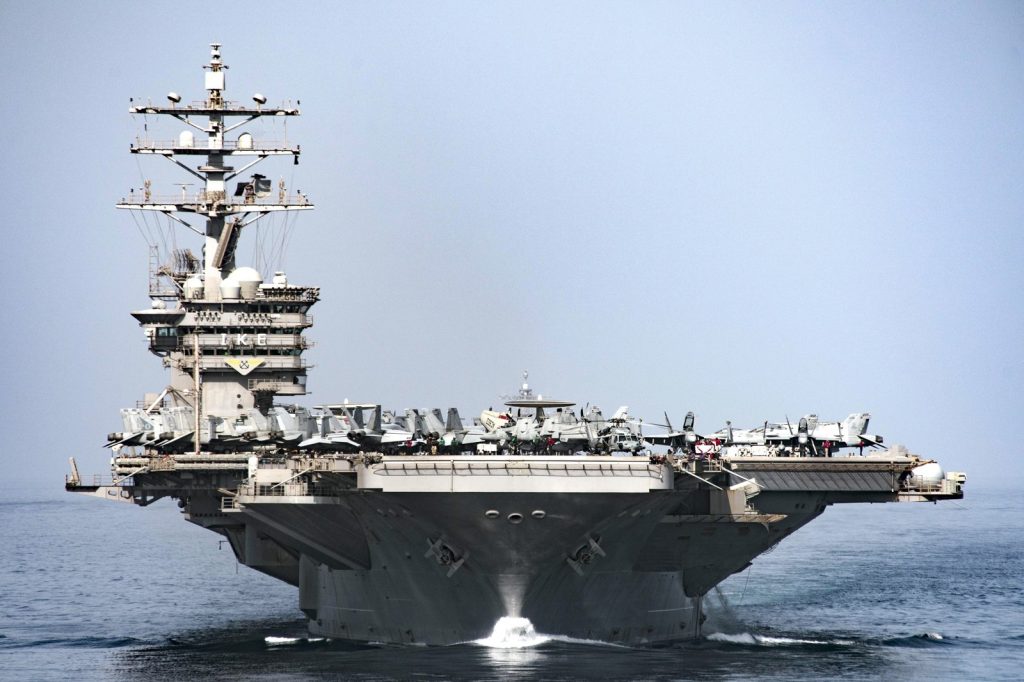
TEHRAN — For the first time, Iran has declared an indefinite closure of the Strait of Hormuz, a move that fundamentally reshapes the landscape of global energy security. The narrow waterway, measuring about 33 kilometers wide at its narrowest point, connects the Persian Gulf to the Gulf of Oman and the Arabian Sea. It is a critical chokepoint for the world’s oil supply.
According to the U.S. Energy Information Administration, approximately 17 million barrels of oil per day—roughly 20 percent of global consumption—passed through the strait in 2023. The announcement came from the IRGC Navy on April 30, 2025.
This marks the first time Iran has declared an indefinite closure, raising the stakes considerably for international markets already watchful of tensions in the region. Major oil exporters that rely on this passage include Saudi Arabia, which moved over 6 million barrels per day through the strait in 2023. Iraq followed at 3.5 million barrels per day, with Kuwait and the United Arab Emirates each shipping 2.5 million barrels daily.
Qatar also sends about 1 million barrels per day of oil and liquefied natural gas through the waterway. The strait has been a flashpoint before.
During the Iran-Iraq War from 1980 to 1988, both sides attacked oil tankers in what became known as the “Tanker War.” In 2012, Iran threatened to close the strait in response to Western sanctions over its nuclear program, but ultimately did not follow through. The current indefinite closure is without precedent.
What this means for the global energy picture
The volume of oil that moves through the Strait of Hormuz each day represents a significant portion of the world’s daily consumption. For the countries that depend on these exports, the closure forces immediate questions about alternative routes, storage capacity, and the stability of supply chains. For Saudi Arabia and Iraq, the two largest users of the waterway, the stakes are particularly high.
Both nations have invested heavily in export infrastructure that relies on this single passage. Kuwait, the UAE, and Qatar face similar vulnerabilities.
The U.S. Energy Information Administration’s data from 2023 paints a clear picture of just how concentrated this chokepoint is. With roughly one-fifth of global oil consumption moving through a passage just 21 miles wide at its narrowest point, any disruption carries immediate consequences for energy prices and supply security worldwide.
Looking ahead
The coming weeks will reveal how global markets and the nations that depend on Persian Gulf oil adjust to this new reality. Whether alternative shipping routes, increased strategic reserves, or diplomatic efforts can offset the impact of the indefinite closure remains to be seen.




