
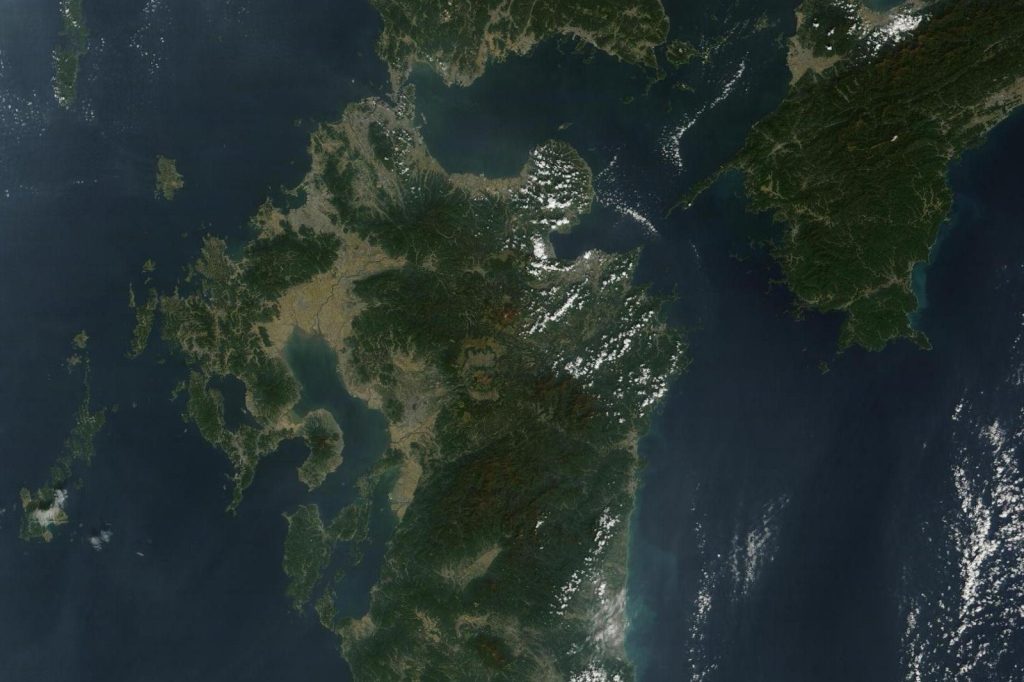
UTO, Japan — The story begins on a quiet Thursday afternoon, when the ground in western Japan gave a sudden, sharp shudder. At 13:47 UTC on July 30, 2026, a magnitude 5 earthquake struck 2 kilometers west-northwest of Uto, a city on the island of Kyushu. The U.S. Geological Survey, which detected the event through its real-time global seismic monitoring network, logged the quake at a depth of 10 kilometers.
At that depth, this was a shallow earthquake. Seismologists point out that shallow events — those less than 70 kilometers deep — typically produce stronger shaking at the surface than deeper earthquakes of the same magnitude.
For those living in the immediate vicinity of Uto, that means the ground motion was likely more intense than a similar quake originating miles below. A magnitude 5 is classified as moderate; it can cause minor to moderate damage near the epicenter, though widespread destruction is not expected. What unfolded next was a familiar pattern for this seismically restless corner of the planet.
No tsunami warning was issued — the Japan Meteorological Agency would have made that call based on the quake’s depth and location on land. The USGS noted that at least 104 earthquakes of magnitude 5.0 or greater have been recorded within about 300 kilometers of this spot over the past two decades.
The strongest in that period was a magnitude 7.1 event in 2024, a reminder that the area sits atop active tectonic boundaries. For those involved — residents, emergency services, geologists — the immediate question is not whether the shaking is over, but when the aftershocks will come. Aftershocks are common following an earthquake of this size.
They may continue for days or even weeks. The USGS and local authorities generally advise people in the affected area to be prepared for further shaking — to secure heavy furniture, to keep emergency supplies at hand, and to know the safest spots inside their homes. That message, at its heart, is about accepting that the ground here moves, and will move again.
For now, the data from the USGS gives a single, clean picture: a moderate event in a region that lives with seismic risk every day. The story does not end with the last tremor.
It continues as scientists monitor the fault, as residents check for cracks in walls and cracks in nerves, and as the aftershocks — small, large, or none at all — determine what comes next.
Sources
- Japan earthquake Tokyo: 5.9-magnitude tremor injures… – India Today
- 7.1 magnitude quake shakes Japan's Kyushu and people… – Breitbart




