
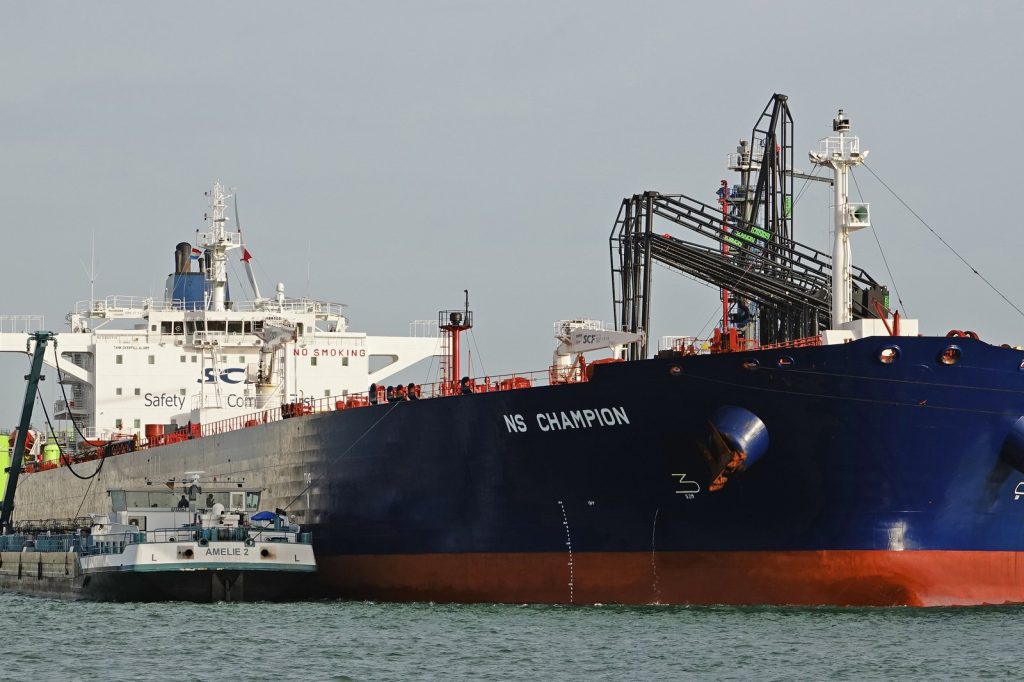
LONDON, July 13 — The shift is already underway in global oil markets, and it is being driven not by OPEC decisions or economic data, but by Ukrainian strikes on Russia’s shadow fleet. That fleet now moves roughly 3-4 million barrels per day of Russian crude — about 3-4% of global supply. When the first major attacks landed, the market reacted instantly.
By April 8, 2025, Brent crude futures rose 2.3% to $89.50 per barrel on news of the strikes. That is a sharp, specific move that signals something deeper: supply disruption fears are no longer theoretical.
The shadow fleet, built to evade Western sanctions, has become a battlefield target. And the consequences are cascading through every layer of the oil trade.
Insurance Markets Flash Red
The most immediate signal came from the insurance sector. War risk premiums for tankers operating in the Black Sea surged, reaching 5% of hull value. That is not a marginal adjustment — it is a fundamental repricing of risk in one of the world’s key energy transit zones.
Shipowners now face a stark calculation: sail into the Black Sea and pay a premium that eats into margins, or reroute and face delays. At the same time, the discount on Russia’s Urals crude relative to Brent widened to $18 per barrel.
Buyers are demanding compensation for the risk of transporting Russian oil through contested waters. That discount is the market’s way of pricing in uncertainty — and it is growing.
OPEC+ Commitments Under Pressure
The strikes also threaten Russia’s ability to meet its OPEC+ production commitments. In 2024, those commitments were set at 9 million barrels per day. If the shadow fleet cannot deliver, Russia cannot pump and sell at the same volume.
The mechanism is simple: no tankers, no exports, no compliance. Analysts at the International Energy Agency have warned that sustained attacks could remove up to 500,000 barrels per day from the market.
That is a significant chunk of supply. Their assessment is blunt: if the strikes continue, oil prices could push above $100 per barrel.
What To Watch Next
The trend underneath all of this is the weaponization of energy logistics. The shadow fleet was designed to be invisible — a grey-zone workaround for sanctions. Now it is a target.
Every strike forces a recalculation: for insurers, for traders, for OPEC+ partners, and for global consumers. Watch this space.
The market is pricing in disruption, but the real question is whether the strikes become sustained. If they do, the $100 threshold is not a ceiling — it is a floor waiting to be tested.




