
LONDON, July 11 — The satellite navigation system that guides everything from commercial airliners to smartphone map apps began as a piece of theoretical physics scribbled on a blackboard in the 1950s. The man behind that vision, Ivan Getting, died in 2003 at the age of 91, but the technical reality he conceived remains the quiet backbone of global positioning. Getting was an American physicist and engineer who first proposed the concept of a satellite-based navigation system during the 1950s.
He was born in New York City on January 18, 1912. He earned a B.S. in physics from the Massachusetts Institute of Technology in 1933, then crossed the Atlantic for a Ph.D. in astrophysics from the University of Oxford in 1935.
During World War II, Getting worked on radar and fire-control systems. In 1960, he became the founding president of The Aerospace Corporation, a nonprofit that supports the U.S. Air Force. That same year, he published a seminal paper outlining the concept of a satellite constellation that could provide global positioning.
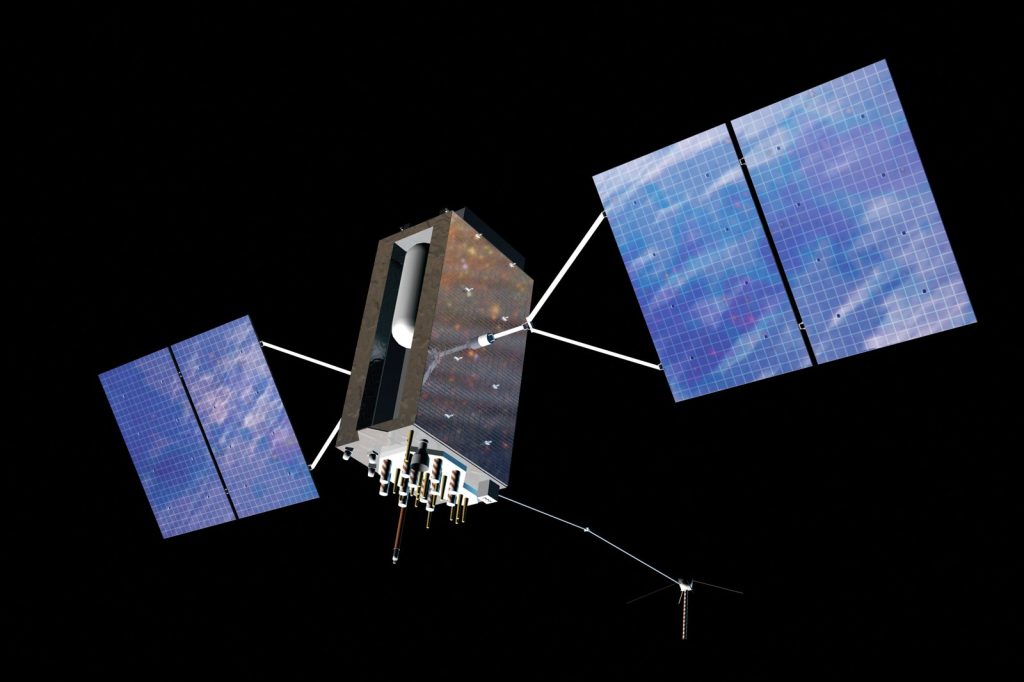
Under the hood of modern GPS sits Getting’s core insight from the early 1960s: a system of satellites in medium Earth orbit. This was not a vague notion of “space-based navigation.” It was a specific, engineered proposal for a network of satellites that would allow a receiver anywhere on the planet to calculate its position.
The U.S. Department of Defense would later turn that concept into the Global Positioning System, but Getting’s early vision is credited as a key precursor. The recognition came steadily. Getting received the IEEE Medal of Honor in 1974, followed by the National Medal of Science in 1975.
These were not ceremonial nods; they reflected his foundational role in what became one of the most quietly ubiquitous technologies on Earth.
The technical reality of medium Earth orbit
Getting’s 1960 paper laid out this architecture before the first GPS satellite was even launched. By then, Getting had been president of The Aerospace Corporation for nearly two decades, steering the organisation that would help the Air Force turn his paper into hardware. The through-line from Getting’s wartime radar work to his satellite navigation concept is clear.
Fire-control systems require precise tracking of moving targets in real time. Extend that principle upward, reverse the geometry so the satellites become the known reference points and the receiver becomes the moving target, and you have the essence of GPS.
Getting died on October 11, 2003, at age 91. The system he envisioned now supports an estimated number of users worldwide. The satellites he proposed in 1960 have been replaced by newer generations, but the orbital architecture remains essentially the same.
The next question for the Pentagon and its contractors is how to harden that architecture against jamming and spoofing — threats Getting could not have foreseen but that his system’s fundamental design must now confront.




