
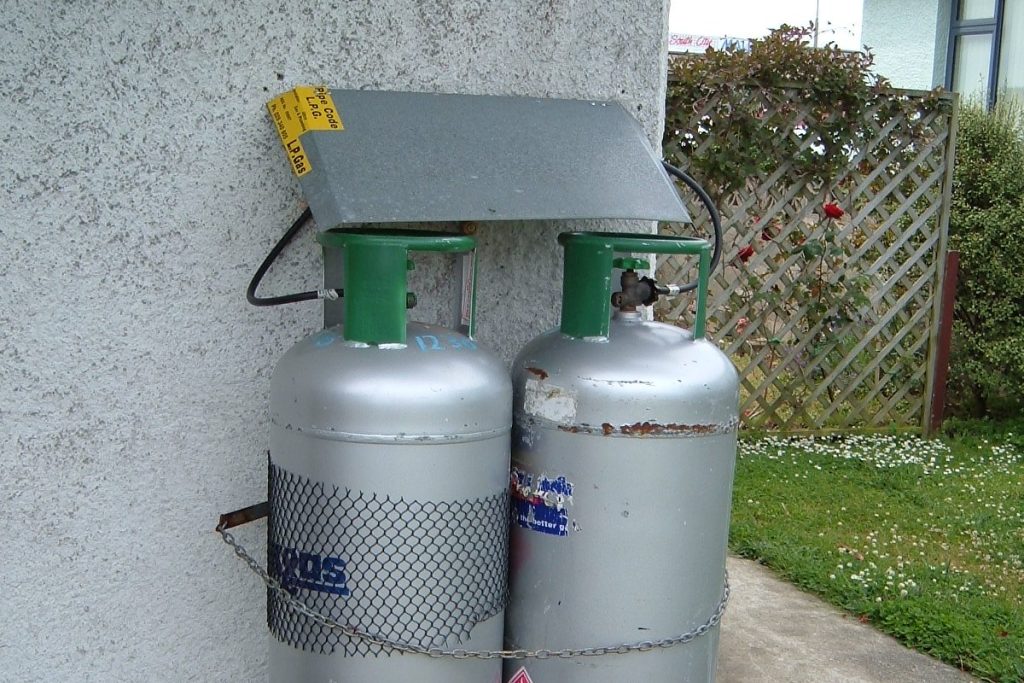
The smoke from wood and charcoal fires has been a fact of life for generations of women cooking meals in the Federal Capital Territory. That daily reality is now being challenged in 18 communities across all six Area Councils, where 10,000 households have received free Liquefied Petroleum Gas cylinders and refill vouchers. The distribution, part of Project Breathe Clean Air Abuja, concluded Thursday at the Bwari Mini Stadium.
The program is a joint effort between the Federal Capital Territory Administration and IHS Nigeria. It launched in November 2025.
The reason for it is stark: rising rates of respiratory tract infections among women and respiratory allergies in children. Doctors traced the common thread to prolonged exposure to smoke from traditional cooking fuels. Open fires.
Kerosene stoves. Charcoal burners.
The fumes don’t just disappear. They fill kitchens and living spaces, day after day. Mariya Mahmud, the Minister of State for the FCT, said the project was designed to cut the number of respiratory diseases caused by indoor air pollution.
She spoke through Maijida Kuku, who represented her at the event. Mahmud pointed out that women and children carry the heaviest burden from cooking smoke. Wider use of LPG, she argued, would improve public health, protect the environment, and help address climate change.
The numbers are telling. Ten thousand families.
Eighteen communities. Six area councils. Every cylinder handed out is meant to replace a source of smoke that has been making people sick.
Dr. Adedolapo Fasawe, the Mandate Secretary of the FCT Health Services and Environment Secretariat, explained the thinking. Cases were rising.
The link was clear. The solution was gas. But handing out hardware is only part of the work.
Sustainability teams from the FCTA and IHS Nigeria went into communities to teach people how to use the cylinders safely. That matters. A gas cylinder in the wrong hands can be dangerous.
The teams visited community leaders, explained the basics, showed them how to connect the stove, how to check for leaks, what to do if something goes wrong. This is a context piece because the problem it addresses is old and deep.
For decades, cooking in much of Nigeria has meant burning solid fuels. The World Health Organization has long classified indoor air pollution from such fuels as a major health risk, particularly for women and young children who spend hours near the fire. The smoke contains fine particles that lodge in lungs, causing infections, chronic bronchitis, and worse.
The FCTA data showing rising respiratory cases is no surprise to anyone who has worked in public health here. Project Breathe Clean Air Abuja is a direct attempt to break that cycle.
It is not a pilot program. It is a distribution program, aimed at scale. Ten thousand cylinders is a significant number.
The refill vouchers mean the families do not have to worry about the ongoing cost immediately. That removes a major barrier. Many households know LPG is cleaner.
They just cannot afford the upfront cost of the cylinder and the stove. The ceremony at the Bwari Mini Stadium was the public face of the program.
Behind it lies months of planning, logistics, and community engagement. The FCTA and IHS Nigeria are betting that cleaner cooking will lead to fewer hospital visits, less money spent on treating respiratory illness, and a measurable improvement in air quality inside homes. Whether the program will be sustained beyond the initial distribution and vouchers remains to be seen.
That is the hard part. Changing cooking habits takes time.
But for the 10,000 families who now have a cylinder, the immediate change is real. The smoke is gone. The risk is lower.
That is the point.
Sources
- FCTA, IHS distribute 10,000 cooking gas cylinders to households
- FCTA, IHS Distribute 10,000 LPG Cylinders in Abuja




