
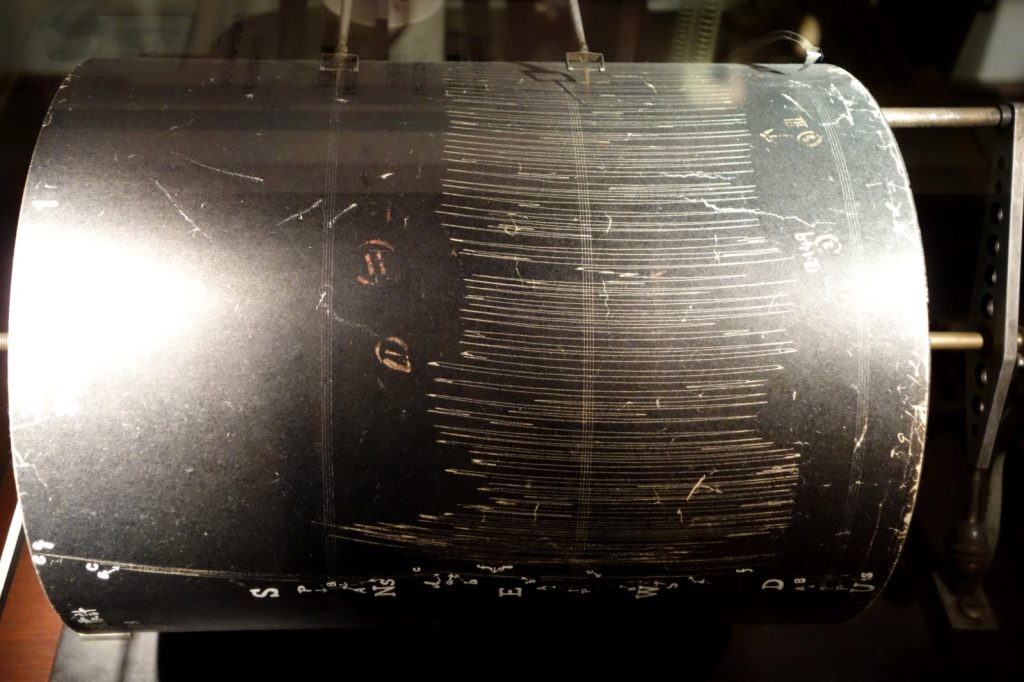
The South Sandwich Islands shook again early Thursday. A magnitude 5.3 earthquake hit the remote region at 05:23 UTC. The U.S. Geological Survey put its depth at 10 kilometers.
That is shallow. Very shallow.
Seismologists draw a line at 70 kilometers. Anything shallower than that counts as a shallow earthquake. At 10 kilometers down, this one released its energy right near the surface.
The shaking tends to be stronger than a deeper quake of the same size. Think of dropping a rock into a pond from a low height versus a high one.
The splash is different. No tsunami warning went out. The epicenter sits in open ocean, far from populated land.
Magnitude 5 quakes are classified as moderate. They can cause minor to moderate damage near the epicenter. But there is nothing much to damage here.
The practical concern is aftershocks. They are common after a quake this size.
They can continue for days or even weeks. People in the area — if there are any — should be ready for more shaking. This event is just the latest pulse in a region that never really stops moving.
The South Sandwich Islands area is seismically active. The USGS data shows at least 500 earthquakes of magnitude 5.0 or greater have been recorded within about 300 kilometers over the past two decades.
That is a lot of shaking. Twenty-five quakes a year, on average, in that size range. The strongest in that period was a magnitude 7.4 event in 2006.
That was a different beast entirely. Magnitude is logarithmic. A 7.4 releases many times more energy than a 5.3.
The difference is not small. The USGS caught this one through its real-time global seismic monitoring network.
That network never sleeps. It tracks earthquakes around the world constantly. Scientists can quickly determine location, depth, and magnitude.
For most people reading this thousands of miles away, the event is a data point. A blip on a graph.
But for the handful of researchers, military personnel, or support staff who might be stationed on the islands or nearby, it is a physical jolt. A reminder of what sits beneath the ocean floor. The South Sandwich Islands sit along a tectonic plate boundary.
The South American Plate meets the Scotia Plate here. It is a subduction zone. One plate dives under the other.
That process builds stress. Stress releases as earthquakes.
It happens over and over. The 2006 magnitude 7.4 was a major release. The 5.3 this week is a smaller one.
Both are part of the same long-term pattern. The region is not going quiet anytime soon.
For comparison, a magnitude 5.3 earthquake is not unusual anywhere on the Ring of Fire. The Pacific Ring of Fire runs through this region. It is the most seismically active zone on the planet.
Japan, Indonesia, Chile, Alaska — they all sit on it. The South Sandwich Islands are just a small piece of that larger system. The quake early Thursday is a routine event in geological terms.
Routine, but not meaningless. It adds to the data.
It confirms the pattern. It keeps the USGS busy. The practical upshot is simple.
Aftershocks will come. They may be smaller.
They may be similar in size. They will likely happen over the next few days or weeks. Anyone in the affected area should stay alert.
That is the standard advice. It applies here just as it does anywhere else. The earth moved.
It will move again.




