
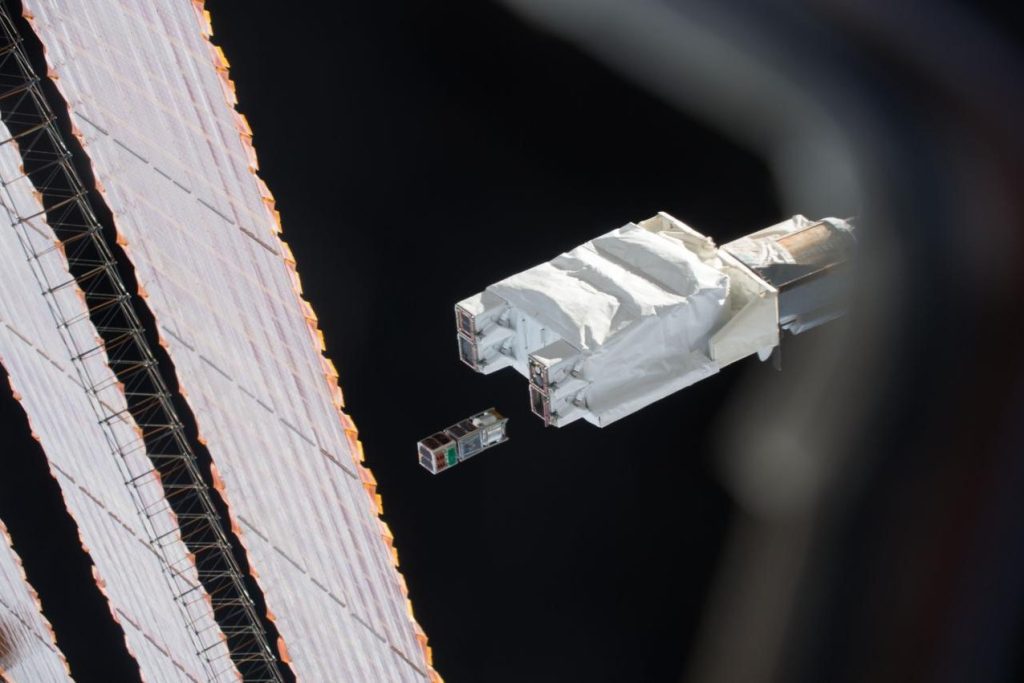
MANILA, July 7 — When satellites burn up in the atmosphere, the debris doesn’t just vanish. It lingers, and for communities across Asia watching the night sky, the question of what comes down — and what stays up — is becoming harder to ignore. Space debris is a growing problem.
More than 30,000 tracked objects larger than 10 centimeters — about four inches — now orbit Earth. That is just the stuff we can see.
The untracked fragments, smaller than a fingernail, number in the millions. Each one travels fast enough to shatter a functioning satellite on impact. The nightmare scenario is the Kessler Syndrome, a cascade where one collision triggers another, and another, until entire orbital bands become unusable.
That is not science fiction. It is a mathematical probability that space agencies have warned about for decades.
SpaceX leads disposal push
SpaceX has been deorbiting its satellites to comply with Federal Communications Commission rules that require a 90 percent probability of disposal within 25 years. Over the past six months, the company deorbited 260 satellites. That is a significant number, and it matters for a simple reason: each satellite left in orbit is a potential collision waiting to happen.
Those 260 deorbitings prevented collisions that could have created thousands of debris fragments. For families across the region who rely on satellite internet — in rural schools in the Philippines, fishing communities in Indonesia, remote clinics in Papua New Guinea — fewer collisions means fewer service disruptions.
It means the connection stays on. But there is a trade-off, and it is one that scientists are watching closely.
Atmospheric pollution from re-entries
Every satellite that burns up on re-entry releases particles into the stratosphere. The European Space Agency reported in 2024 that satellite re-entries currently contribute about one percent of stratospheric aerosol loading. That sounds small.
But the ESA projects that figure could rise to 10 percent by 2040 if large constellations continue to expand at the current pace. Ten percent is not trivial.
Stratospheric aerosols affect how sunlight reaches the surface. They influence cloud formation, rainfall patterns, and temperatures. For agricultural communities across Asia — from rice farmers in Vietnam to wheat growers in India — changes in the stratosphere mean changes in the weather that feeds their families.
The Inter-Agency Space Debris Coordination Committee, known as the IADC, has issued guidelines for satellite disposal. These are recommendations, not laws.
There are no binding international treaties on atmospheric pollution from satellite re-entries. No country has signed an agreement limiting how many satellites can be burned up in the atmosphere. No global body enforces a cap on the metals and compounds released during re-entry.
That regulatory gap is becoming harder to ignore as the number of satellites in orbit grows.
What it means for people
Closer to home, the implications are practical. The Philippines, like much of Southeast Asia, depends on satellite connectivity for disaster response. When typhoons knock out ground infrastructure, satellite links are often the only way to coordinate relief.
If orbital debris makes those links unreliable, the consequences are measured in lives, not just data packets. For communities across the region, the space debris problem is not abstract.
It is about whether the internet stays on during a storm. It is about whether the weather patterns that govern planting seasons remain stable. It is about whether the orbital highways that connect the modern world remain open.
The Kessler Syndrome is a concern, but it is not the only concern. The slow accumulation of particles in the stratosphere, the lack of binding rules, the pressure to deorbit satellites quickly — these are all pieces of the same puzzle.
And no single country or company can solve it alone. What happens next depends on whether the international community can agree on rules that address both orbital debris and atmospheric pollution. The IADC guidelines are a starting point, but they are not enforceable.
The ESA projections are a warning, but they are not a policy. For now, the satellites keep going up. And what comes down stays with us.




