
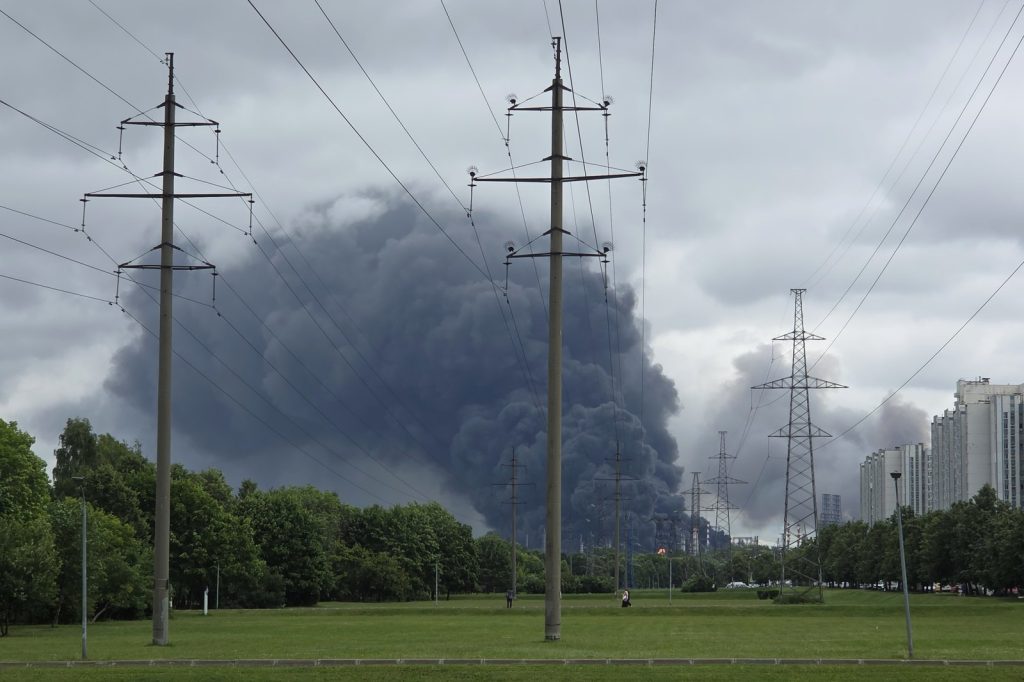
MOSCOW, July 13 — Ukrainian drone strikes on Russian oil infrastructure have disrupted refining capacity and exports, according to industry data. The mechanics here are straightforward: targeted attacks on refineries and storage depots disrupt the chain from well to world market. The numbers tell the story.
In 2024, Russia’s oil refining capacity fell by about 14% due to drone attacks, per industry estimates. That is not a trivial trim — it is a systemic hit to the country’s ability to process its own crude.
The Stavropol Krai depot, part of the North Caucasus pipeline network that supplies fuel to Black Sea ports, has been among the sites hit. When a depot burns, the bottleneck tightens.
Follow the money
The revenue loss cascades. Russia exported approximately 4.7 million barrels per day of crude oil in 2023, generating around $180 billion in revenue. Energy taxes account for about one-third of the federal budget.
So every barrel that cannot be refined or exported — or that sells at a discount — directly crimps the Kremlin’s war chest. The catch is that the disruption does not stop at the border.
Russia has been forced to import gasoline from Belarus to cover domestic shortfalls, and domestic supply constraints have led to price increases. That is the kind of pressure that cuts into public tolerance for a war effort. On the global side, Brent crude averaged $85 per barrel in early 2025, a level that reflects persistent volatility.
The strikes on Russian infrastructure add one more variable to a market already jittery from sanctions.
The sanctions architecture
On closer reading, the Western response has been layered. The United States and the European Union have imposed a price cap of $60 per barrel on Russian oil since December 2022. The idea was to keep Russian crude flowing to global markets — to avoid a price spike — while starving Moscow of the premium it once commanded.
The drone strikes, in effect, do some of the same work from a different angle: they physically reduce the volume Russia can move, rather than just the price it can fetch. The result is a tightening vice.
Lower refining capacity means less diesel and gasoline for export. Less export volume means lower revenue. Lower revenue means less money for the war, at a time when budget pressures are already mounting.
The strikes are not just tactical — they have strategic economic consequences that compound over time. What to watch next: whether the strikes continue to target refining nodes and depot networks, and whether Russian logistics can adapt fast enough to keep export volumes from slipping further.
The oil industry is a machine with many moving parts; break enough of them, and the whole system slows.




