
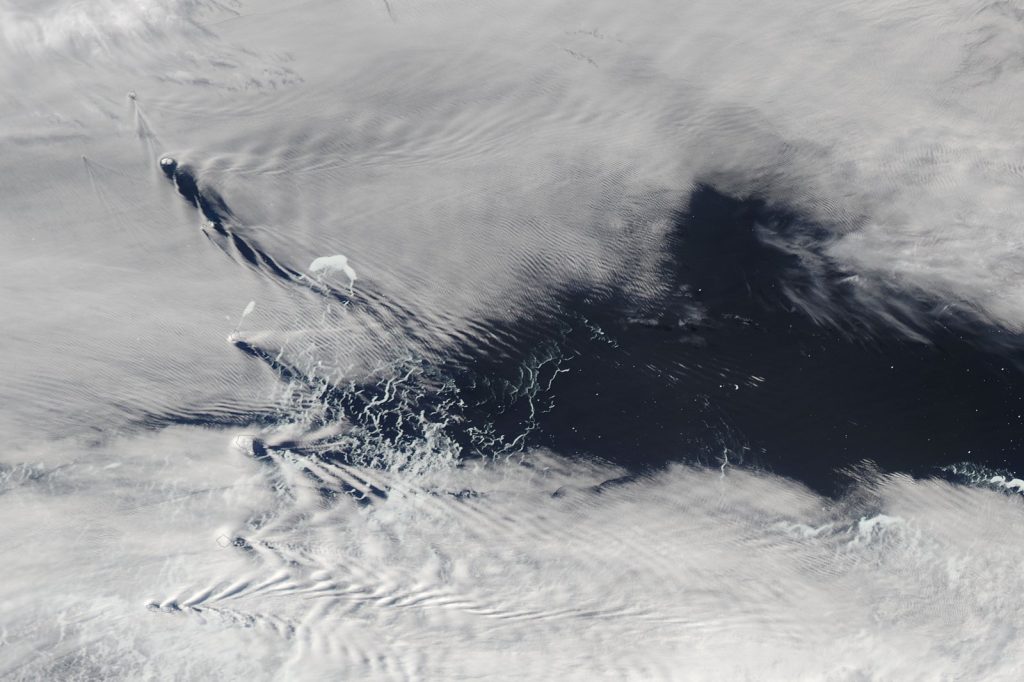
For the roughly 200 people who live on the British Overseas Territory of the South Sandwich Islands, Thursday morning began with a deep, rolling tremor. A magnitude 5.2 earthquake struck the region at 02:57 UTC, according to the U.S. Geological Survey. The quake hit at a depth of 183.485 kilometers.
The islands in this remote stretch of the Southern Ocean are uninhabited except for rotating scientific and military personnel at the British Antarctic Survey base on South Georgia. That base sits about 800 kilometers from the epicenter.
The people there are the ones who might have felt the ground shift. Seismologists classify this as an intermediate-to-deep earthquake. That depth matters.
Deeper quakes tend to spread their energy across a wider area, shaking more territory but with less violent force at the surface. The USGS data shows the quake was not strong enough to trigger a tsunami warning.
No coastal evacuation was ordered. The South Sandwich Islands region is a restless piece of the planet. The USGS has recorded at least 500 earthquakes of magnitude 5.0 or greater within about 300 kilometers of this spot over the past two decades.
That is roughly 25 a year. The biggest was a magnitude 8.1 event in 2021. Thursday’s quake falls squarely into the moderate range.
Earthquakes of this size can cause minor to moderate damage near the epicenter. But the depth likely limited the shaking intensity at the surface.
For the personnel stationed in the region, the immediate concern is aftershocks. Seismologists say secondary tremors are common following a quake of this magnitude. They can continue for days or even weeks.
People in the affected area are generally advised to be prepared for further shaking. The USGS detected the event through its real-time global seismic monitoring network.
The system lets scientists quickly locate and characterize earthquakes anywhere in the world. That speed provides critical information for response and public safety. In a region where the nearest full hospital is in the Falkland Islands, hundreds of miles away, that data is not academic.
The South Sandwich Islands sit along a tectonic plate boundary where the South American Plate meets the Scotia Plate. That boundary is a factory for earthquakes. The deep nature of Thursday’s event suggests it originated in the subduction zone, where one plate slides beneath another.
These zones produce the planet’s largest quakes. The 2021 magnitude 8.1 event was a shallow thrust earthquake, likely on the same fault system.
No injuries or damage have been reported. The British Antarctic Survey has not issued any operational changes. The research station on South Georgia continues normal operations.
For the people there, a magnitude 5.2 earthquake is a known risk of living on the edge of a tectonic plate. They have procedures.
They have drills. They have the USGS data that tells them the shaking is over. The deep quake Thursday was a reminder of where they live.
Not a warning. Just a fact of the ground beneath them.




