MOSCOW, July 15 — Russia’s strategic push to develop the Northern Sea Route is advancing on multiple fronts, with officials confirming that the shipping lane remains a cornerstone of the country’s long-term economic planning for the Arctic. The route, which stretches roughly 5,600 kilometers along Russia’s Arctic coast from the Barents Sea to the Bering Strait, is central to Moscow’s ambitions to tap the region’s natural resources and secure a year-round maritime corridor.
The government has set a target to increase cargo traffic along the NSR to 80 million tons by 2024, a significant jump from the 20 million tons recorded in 2018. According to the statement, this growth is expected to be driven largely by major energy projects already operating along the route.
The Yamal LNG plant, operated by Novatek, began production in 2017 and has an annual capacity of 16.5 million tons. That facility alone accounts for a substantial portion of current traffic. The Prirazlomnoye oil field, operated by Gazprom Neft, also relies on the NSR for transporting its output.
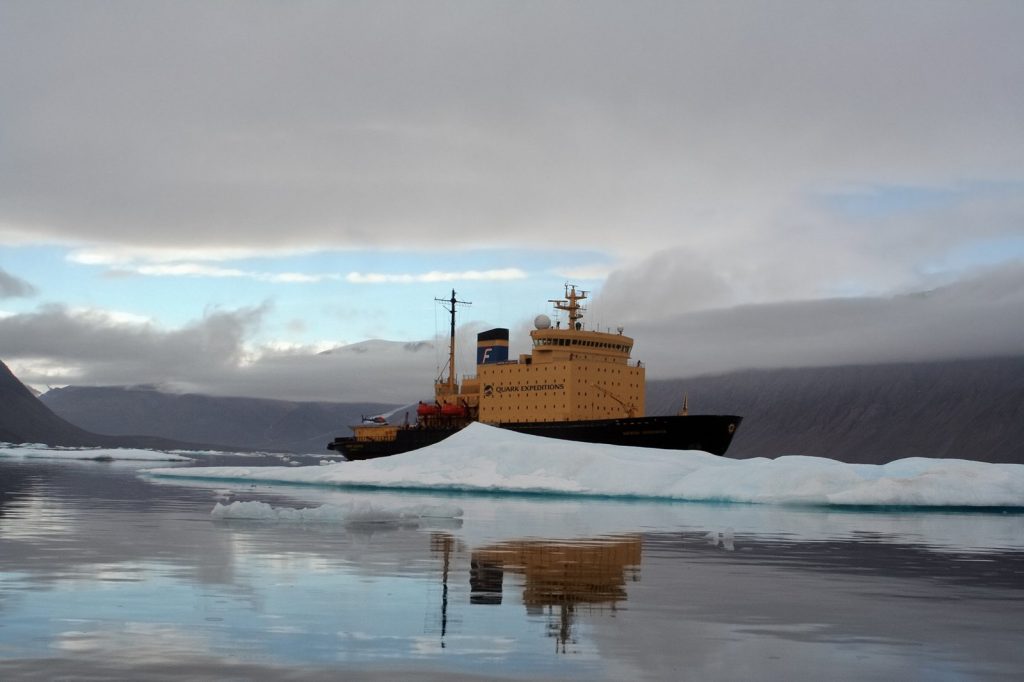
Russia has invested heavily in a fleet of nuclear-powered icebreakers, including the Arktika-class vessels, to keep the route open year-round. These icebreakers are designed to extend the navigation season, which has historically been limited by thick ice cover for most of the year.
The harsh conditions also drive up insurance costs for shippers, a factor that has tempered commercial interest despite the route’s potential to cut transit times between Europe and Asia compared to the Suez Canal.
Strategic vulnerabilities and foreign interest
The removal of air defenses from Arctic bases could make the NSR more vulnerable to potential attacks or disruptions, officials confirmed. This development has raised questions about the security of the route, particularly as Russia seeks to attract foreign investment and traffic. China has shown interest in the NSR, dubbing it the “Polar Silk Road,” and has invested in joint projects.
Beijing’s involvement is seen as both an economic opportunity and a strategic concern for Moscow, which views the Arctic as a zone of national priority. The route remains ice-covered for most of the year, and insurance costs are high due to the harsh conditions.
These factors have limited the volume of transit traffic, with most cargo movements tied to resource extraction projects rather than through-shipping. The Yamal LNG plant and the Prirazlomnoye field are the primary drivers of current traffic, but the government is aiming to diversify cargo types and attract more shipping companies.
Infrastructure and operational challenges
The nuclear-powered icebreaker fleet is a key enabler for year-round navigation, but the vessels require significant maintenance and investment. The Arktika-class ships are among the most powerful icebreakers in the world, capable of breaking through ice up to several meters thick. However, the removal of air defenses from Arctic bases has introduced a new layer of risk, as the route passes through remote and potentially contested waters.
China’s interest in the NSR has led to joint projects, though the extent of Beijing’s involvement remains limited. The “Polar Silk Road” designation reflects China’s broader ambitions to expand its influence in the Arctic, but the route’s operational challenges have slowed progress.
Insurance costs remain a barrier for many shipping companies, and the short navigation window outside the icebreaker-assisted season limits commercial viability. Looking ahead, the success of the NSR will depend on Russia’s ability to maintain its icebreaker fleet, attract foreign investment, and address security concerns. The government’s target of 80 million tons by 2024 is ambitious, and the record shows that current traffic levels are still far below that goal.
The route’s future will likely be shaped by the interplay of economic incentives, strategic interests, and the harsh realities of Arctic operations.