SINGAPORE, July 15, 2026 — The race to connect the world from space has turned into a clash of titans, with SpaceX and Amazon now locked in a battle that stretches from rocket launches to regulatory hearings. For communities across Asia, where internet access remains patchy in many rural and island regions, the outcome of this rivalry could determine how—and when—they finally get online. Both companies are pouring enormous resources into satellite internet constellations.
SpaceX launched its Starlink service back in 2019, and by February 2025 it had already deployed over 5,000 satellites and signed up more than 2 million subscribers around the globe. Amazon, through its Project Kuiper, announced its own plans in 2019.
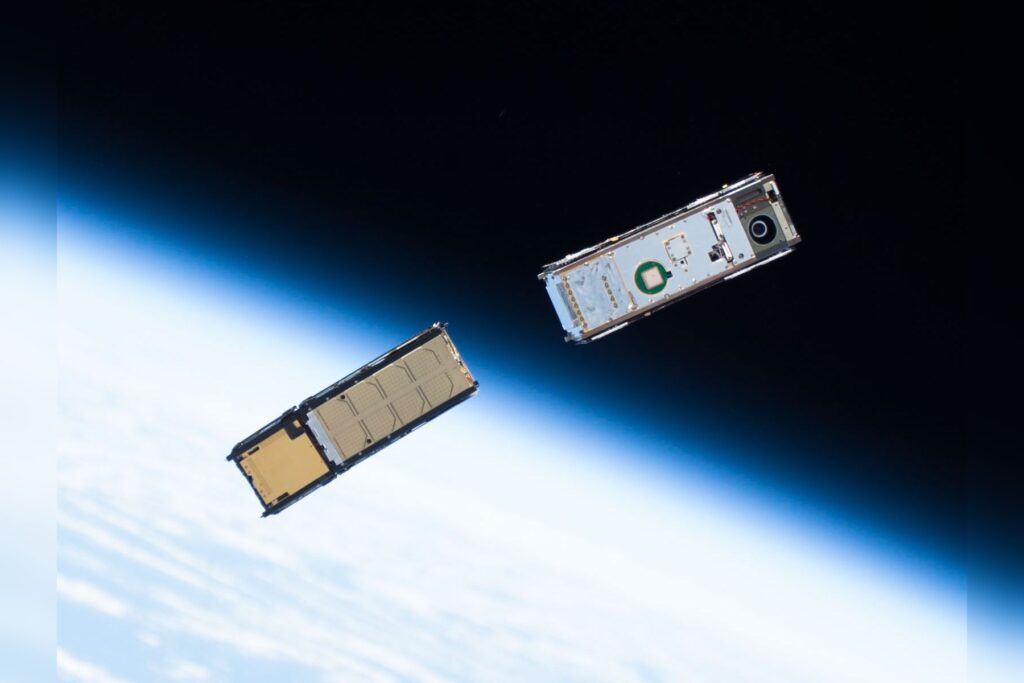
The company aims to place 3,236 satellites in low Earth orbit. It launched its first two prototype satellites in October 2023 and expects to begin full commercial service by this year. The numbers involved are staggering.
SpaceX, founded by Elon Musk in 2002, and Amazon, founded by Jeff Bezos in 1994, together represent a combined market capitalisation of roughly $4.5 trillion as of early 2025. That kind of financial firepower means neither side is likely to back down easily.
More than just satellites
This is not simply a contest over who can put the most hardware in the sky. The two companies are also direct rivals in rocket launch services. SpaceX’s Falcon 9 and Falcon Heavy rockets currently dominate the commercial launch market.
Amazon, meanwhile, has taken a different approach. It has contracted with three separate providers—Blue Origin, which Bezos also founded, the United Launch Alliance, and Arianespace—for up to 83 launches to deploy the Kuiper constellation.
The competition extends into cloud computing as well. Amazon Web Services, or AWS, is a giant in that field, but SpaceX has been developing its own space-based data services. Both companies are also chasing lucrative government contracts.
SpaceX has won major deals from NASA and the U.S. Department of Defense. Amazon, for its part, has secured contracts for cloud computing services with government agencies.
Closer to home for many in the Asia-Pacific region, the rivalry is intensifying over the very building blocks of space-based communications: spectrum rights, orbital slots, and regulatory approvals from the U.S. Federal Communications Commission. These are not abstract technical matters. They determine which company can operate in which orbital paths and on which radio frequencies—and that directly affects the speed, cost, and availability of satellite internet for users on the ground.
What it means for communities
For families in the Philippines, Indonesia, and other archipelagic nations, satellite internet has long been seen as a potential game-changer. Undersea cables are expensive to lay and vulnerable to disruption. Terrestrial networks are difficult to build across thousands of scattered islands.
Low Earth orbit satellites, flying much closer to the ground than traditional communications satellites, promise lower latency and faster connections. Starlink already has a head start.
With more than 5,000 satellites in orbit and over 2 million subscribers, it is operational in many parts of the world. Project Kuiper, with its planned fleet of 3,236 satellites, is still ramping up. But Amazon has deep pockets and a vast existing customer base through its e-commerce and cloud computing businesses.
The regulatory front is where much of the action is now playing out. Both companies are lobbying the FCC for favourable treatment on spectrum allocation and orbital slots.
These are finite resources. The more satellites one company launches, the more crowded the orbital bands become, and the harder it is for a competitor to find room. The FCC’s decisions will shape the competitive landscape for years to come.
A long-running rivalry
The personal history between Elon Musk and Jeff Bezos adds another layer to the story. The two billionaires have traded barbs publicly for years, and their companies now compete on multiple fronts. But the stakes go far beyond corporate egos.
The infrastructure being built today will determine who controls access to space-based communications for the next generation. SpaceX has been at this longer and has more hardware in orbit.
But Amazon is leveraging its existing strengths in cloud services and its ability to secure launch capacity from multiple providers. The 83 launches Amazon has lined up represent a massive commitment to getting Kuiper operational as quickly as possible. For now, the competition is driving rapid innovation.
Both companies are pushing the boundaries of what satellite constellations can do. The question for communities across Asia is whether that competition will also drive down prices and expand access to the most remote areas.
That answer is still unfolding, and it will depend heavily on how regulators in Washington and elsewhere choose to manage the competing claims.