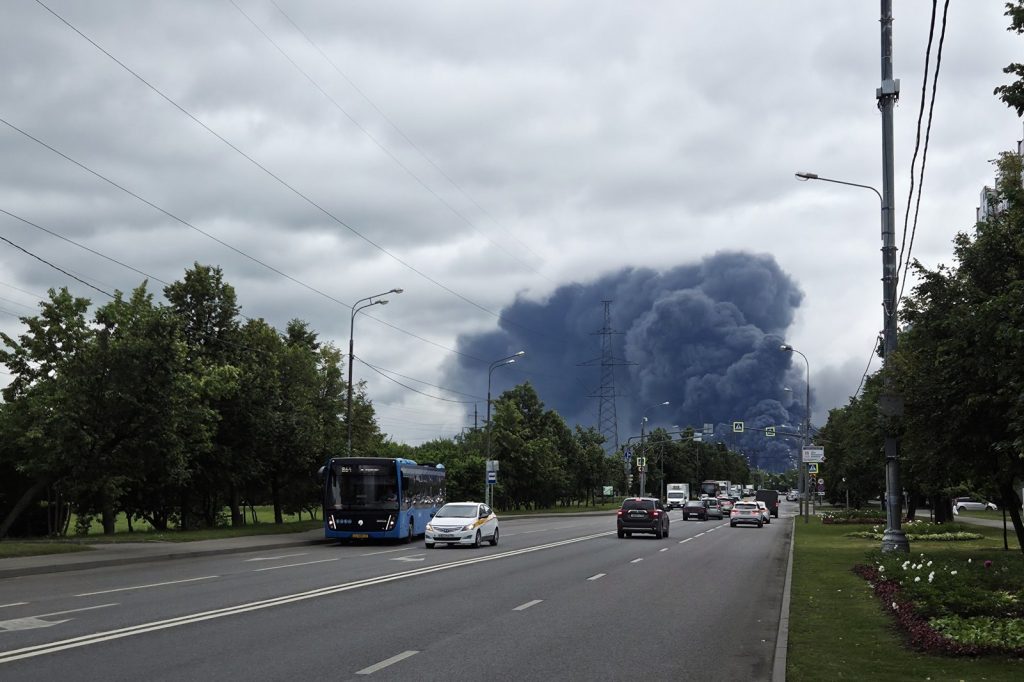
LONDON, July 13 — The mechanics here are worth watching closely. Ukrainian strikes on Russian oil infrastructure, including the March 1, 2025 attack on the Stavropol Krai depot, have become a recurring variable in global energy markets. The question is not whether they matter—they do—but how much, and for how long.
Brent crude, the global benchmark, tells part of the story. On February 28, 2025, it traded at $82 per barrel, up from $76 a month earlier.
That jump was driven by geopolitical tensions, and the Stavropol strike landed the next day. The catch is that a single attack on one depot does not automatically send prices into a sustained spike. The real risk lies in what happens if disruptions compound.
Follow the supply chain. Russia is the world’s third-largest oil producer, averaging 10.9 million barrels per day in 2023.
The Stavropol Krai depot is part of the Caspian Pipeline Consortium, which handles about 1.2 million barrels per day—roughly 1% of global supply. A prolonged disruption to that pipeline could push prices higher, and that would not stay contained in Russia. Gasoline prices in the United States, which averaged $3.50 per gallon in February 2025, would feel the pressure.
The International Energy Agency has warned that supply risks from the Ukraine conflict could add $10 to $15 per barrel to oil prices. That is not a hypothetical. On closer reading, the IEA’s assessment reflects a market that is already tight and increasingly sensitive to any supply-side shock from a major producer.
Financial markets reacted to the March 1 strike in ways that confirm the pattern. The Russian ruble fell 2% against the dollar that day.
The Moscow Exchange index dropped 1.5%. Those are not trivial moves. They signal that investors see the attacks as more than symbolic—they affect the real economy and the state’s ability to export.
Hedge funds have increased long positions in oil futures by 15% in the past week. That is a clear bet that prices will rise further.
The positioning suggests that institutional money is pricing in continued disruption, not a quick resolution. The broader picture is that Ukraine’s strikes on Russian oil infrastructure are now a recurring feature of this conflict, not a one-off. Each attack tests the resilience of a supply chain that the global market depends on.
The Caspian Pipeline Consortium’s throughput—about 1% of global supply—may seem small, but in a market where every barrel matters, 1% is enough to move prices. What to watch next is whether the strikes become more frequent or more damaging. The IEA’s warning of a $10-$15 per barrel risk premium is not a ceiling.
If disruptions to Russian export capacity deepen, that premium could grow. The ruble and the Moscow Exchange will be early indicators.
So will Brent crude, which remains the benchmark to track. The Stavropol attack was a single event. But the pattern it represents—targeted strikes on energy infrastructure with measurable market consequences—is now part of the conflict’s economic logic.
That is the story that matters for oil prices going forward.