
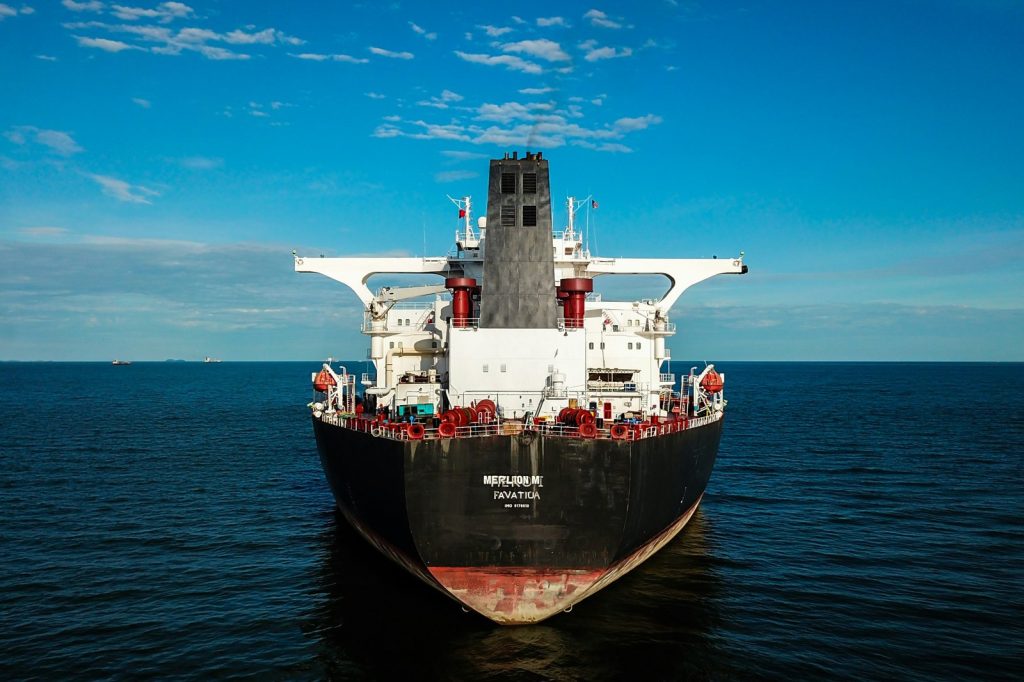
DUBAI, Aug. 6 — Six oil tankers. Four attacked in May, two more in June. In the summer of 2019, the waters around the Strait of Hormuz turned into the most dangerous stretch of sea in the global oil trade, and the markets reacted almost instantly.
Brent crude prices spiked about 10 percent on the disruptions, touching $72 a barrel in June 2019. The surge was temporary. The anxiety, for the crews who sail those waters and the traders who bet on them, lingered far longer.
The United States and its allies blamed Iran for the attacks. Iran denied involvement. For the seafarers caught in the middle, the accusation and the denial were background noise to a more urgent question: whether the next tanker through the strait would be the next one hit.
Six Tankers, Two Months
The incidents did not emerge from a vacuum. In May 2018, Washington pulled out of the 2015 Iran nuclear deal and reimposed sanctions on Iran’s oil exports. The goal was to squeeze Tehran’s crude revenue. The result, by the spring of 2019, was a standoff at sea.
The first four tanker attacks came in May 2019. The next two followed in June, all near the strait that carries a huge share of the world’s oil. Each incident sent shippers recalculating risk and insurers recalibrating premiums. Brent, the international benchmark, climbed steadily and then jumped — hitting that $72 mark in June.
The United States and its allies pointed the finger squarely at Iran. Tehran’s denials did little to calm the market. With sanctions already biting at Iran’s exports, the question of who was responsible mattered less to traders than the possibility that the strait itself could become unusable.
The September Escalation
The tanker attacks were not the end of the story. In September 2019, a drone and missile attack struck Saudi Arabia’s Abqaiq and Khurais oil facilities — the heart of the kingdom’s production. The United States and Saudi Arabia attributed the assault to Iran.
The market response was brutal and immediate. Brent crude surged 14 percent in a single day, the largest one-day increase since the 1991 Gulf War. It was a stark reminder that the region’s oil infrastructure, not just its shipping lanes, sat squarely in the crosshairs of the broader confrontation.
That September spike dwarfed the June tanker-driven move, but the two episodes belonged to the same escalation cycle: sanctions, retaliation, accusation, denial — with the world’s energy supply as the collateral.
A Chokepoint That Still Holds
The Strait of Hormuz is not just a waterway. It is a critical chokepoint through which seaborne oil moves in volumes the world cannot easily replace. Analysts have long warned that a prolonged closure could remove up to 30 percent of seaborne-traded oil from the market.
The math behind that warning is simple. Roughly a third of the oil that travels by sea passes through Hormuz, and there is no pipeline alternative of comparable scale. Close the strait for weeks, and the result would be severe supply shortages and price shocks that would touch economies far beyond the Persian Gulf.
For the people who live and work along those shores, the stakes were never abstract. The tanker crews who crossed the strait in 2019 did so knowing the water had become a flashpoint. The fishermen, port workers, and trading families whose livelihoods depend on the waterway watched the same headlines the rest of the world saw — only with more at stake.
Seven years on, the pattern that produced 2019’s volatility remains intact: the sanctions are still contested, the nuclear deal still broken, and the strait still carries the world’s oil past rival coastlines. What to watch next is whether the diplomatic standoff that followed the 2019 attacks can hold, or whether the region — and the market — are in for another summer like that one.
The lesson of 2019 is straightforward. It does not take a full closure of the strait to move oil prices. Sometimes six tankers are enough.




