
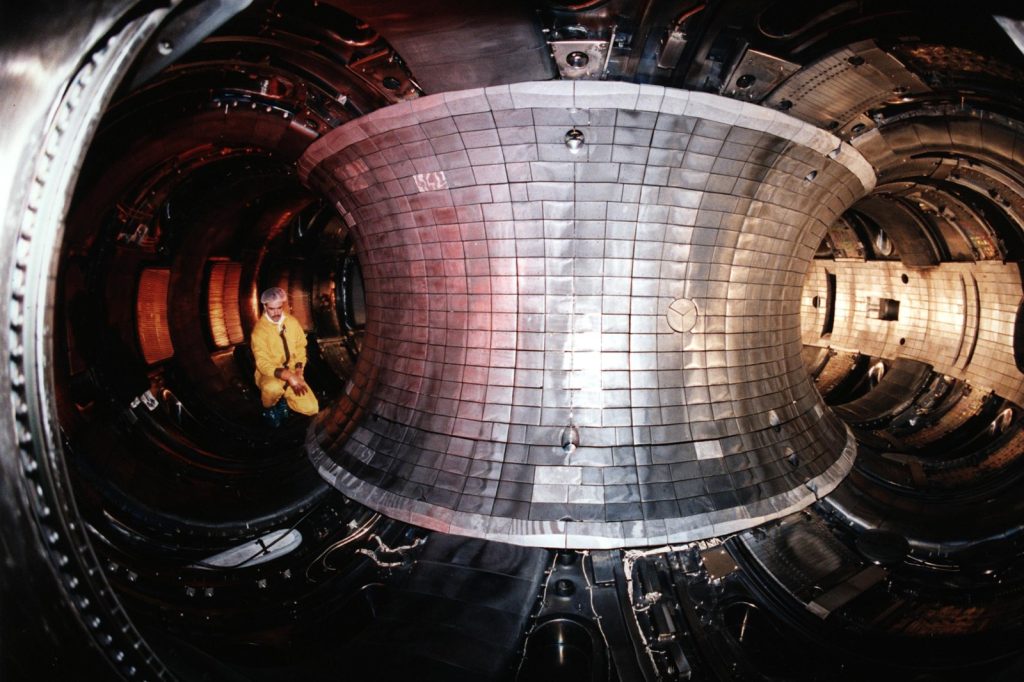
CAMBRIDGE, Mass., July 9 — The race to commercialize fusion power has drawn more than 30 private companies and over $5 billion in global investment by 2023, according to the Fusion Industry Association. On the ground in labs from Massachusetts to Washington state, engineers are pushing against long-held timelines, betting that the physics that powers the sun can be tamed for the grid within this decade. Commonwealth Fusion Systems, founded in 2018 and based here in Cambridge, is developing a compact tokamak design that relies on high-temperature superconducting magnets.
The company has set a target of having a commercial reactor by 2035. Across the country in Foothill Ranch, California, TAE Technologies — founded in 1998 — has raised more than $1.2 billion for its field-reversed configuration approach, aiming for a commercial plant by 2030.
Public money, private ambition
The U.S. Department of Energy in 2022 launched a $50 million public-private partnership program called the Fusion Innovation Research Engine, or FIRE, to support these companies. The funding signals a shift in Washington’s posture toward fusion — once the exclusive domain of government labs like the National Ignition Facility — as private capital and technical breakthroughs have accelerated the field. Helion Energy, founded in 2013 and based in Everett, Washington, has raised $500 million for its pulsed-field-reversed configuration.
The company set a goal of a 50-megawatt reactor by 2024. That deadline has passed.
The scene now: a crowded field where some targets slip while others press ahead, and where the gap between laboratory demonstration and a working power plant remains the central question. General Fusion, founded in 2002 in Vancouver, Canada, is building a magnetized target fusion demonstration plant in the United Kingdom, expected to be operational by 2025. First Light Fusion, founded in 2011 in Oxford, UK, takes a different technical path, using a projectile-based approach to trigger fusion reactions.
Industry confidence, hard physics
The Fusion Industry Association’s 2022 report found that 93% of private fusion companies believe commercial fusion will be achieved by 2030. That confidence is striking for a technology that has, for decades, remained decades away. By nightfall in any of these company towns, the work continues — magnets being tested, plasmas being compressed, investors being pitched on a future that keeps receding but never quite disappears.
What to watch next: whether any of these designs can produce net energy at pilot scale, and whether the regulatory and grid infrastructure will be ready when — or if — the physics delivers. The next few years will tell.




