
LAUREL, Maryland, July 9 — A small spacecraft that has already rewritten textbooks on the outer solar system is now quietly heading for a historic milestone. NASA’s New Horizons probe, launched on January 19, 2006, is approaching the boundary of the solar system known as the heliopause. For communities across Asia who have followed its journey from the beginning, this mission is a reminder of how far human curiosity can take us.
The heliopause is the region where the solar wind — the stream of charged particles flowing from our Sun — meets the interstellar medium, the vast space between stars. It is a dynamic and little-understood frontier.
New Horizons is expected to cross this boundary in the late 2020s or early 2030s. If it succeeds, it will become only the third human-made object ever to leave the solar system, following Voyager 1, which crossed in August 2012, and Voyager 2, which crossed in November 2018. For families across the region who have watched space exploration from afar, this is a story of persistence.
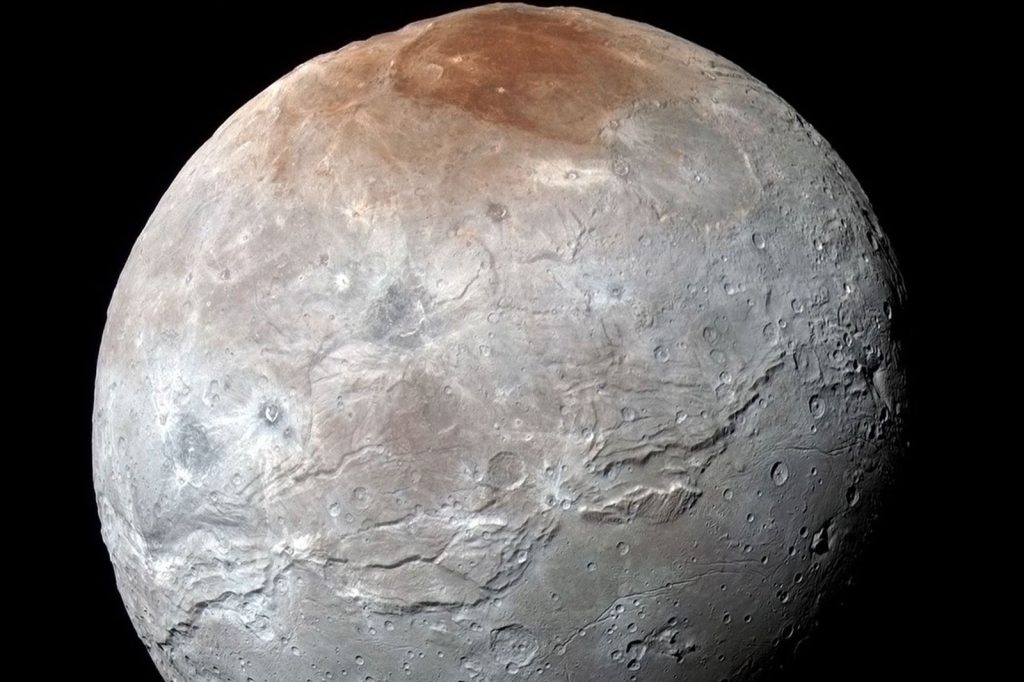
New Horizons has already given us a close-up look at Pluto on July 14, 2015, and the Kuiper Belt object Arrokoth on January 1, 2019. Now, it is about 50 astronomical units from the Sun.
One astronomical unit is the average distance between Earth and the Sun, roughly 93 million miles. The probe is currently in the Kuiper Belt, a vast ring of icy bodies beyond Neptune.
What the probe carries
New Horizons is not just a passenger on this journey. It carries instruments designed to measure plasma, dust, and magnetic fields. These tools will provide data on the heliopause itself, helping scientists understand how our Sun’s influence fades into the wider galaxy.
The mission is managed by the Johns Hopkins University Applied Physics Laboratory in Laurel, Maryland. The principal investigator is Alan Stern of the Southwest Research Institute in Boulder, Colorado.
The probe is powered by a radioisotope thermoelectric generator, or RTG. This type of power source converts heat from the natural decay of radioactive material into electricity. Engineers expect New Horizons to have enough power to keep operating until the mid-2030s.
That timeline gives it a real chance to cross the heliopause while still sending data home.
Closer to home
What does this mean for people across Asia? For one, it is a shared human achievement. The Voyager probes were launched in 1977, and their crossing of the heliopause was a milestone for an earlier generation.
Now, a new generation gets to witness a similar moment. The data New Horizons sends back will help scientists everywhere, including those in Asian research institutions, understand the environment beyond our solar system.
There is also a practical side. Understanding the heliopause and the interstellar medium helps scientists model how cosmic rays reach Earth. This has implications for satellite safety, astronaut health, and even our understanding of climate.
For communities that rely on satellites for communication, weather forecasting, and navigation, this research matters. The probe’s journey is not over.
It is still in the Kuiper Belt, about 50 astronomical units from the Sun. The heliopause is a dynamic region, meaning its exact location shifts over time. New Horizons is expected to cross it in the late 2020s or early 2030s, but the exact timing depends on how the boundary behaves.
For now, the spacecraft continues its quiet work. It is a small, distant ambassador of human curiosity. And for families across Asia who look up at the night sky, it is a reminder that our reach extends far beyond our own world.
Sources
- Probe Poised to Become First Manmade Object to Leave Solar…
- New Horizons captures strange views on star-shifted skies




