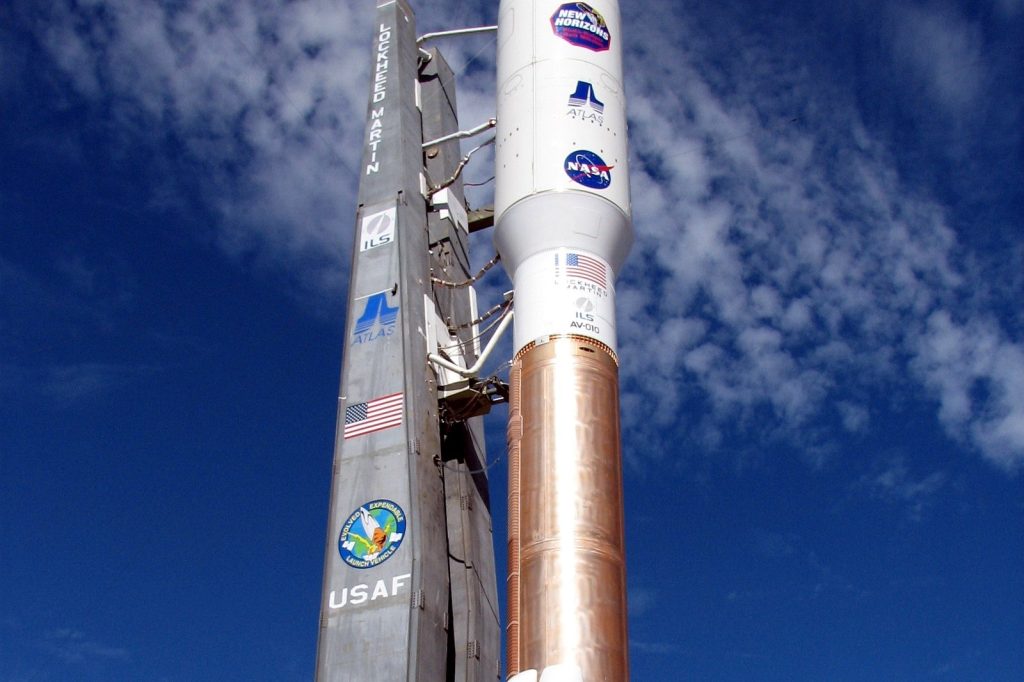
LAHORE, July 9 — The New Horizons spacecraft, now the most distant human-made object ever to operate beyond the planets, continues to send data back to Earth from a region of space that no probe has ever visited before. As of 2023, the probe is about 50 astronomical units from the Sun, traveling at approximately 14 km/s relative to our star. One astronomical unit is about 149.6 million kilometers.
The spacecraft’s longevity is made possible by its radioisotope thermoelectric generator, or RTG. This power source, which converts the heat from decaying plutonium-238 into electricity, initially provided about 240 watts of power.
By 2023, that output had decayed to about 200 watts. The plutonium-238 inside the RTG has a half-life of 87.7 years.
Communicating from the Edge of the Solar System
Communicating with a spacecraft so far from Earth is no small task. New Horizons relies on the Deep Space Network. At its current distance, a signal traveling at the speed of light takes about 7 hours to reach Earth.
Data transmission rates are around 1 to 2 kilobits per second. The probe carries about 8 gigabytes of solid-state memory.
The trajectory of New Horizons is hyperbolic, meaning it will not return to the solar system. Its path is taking it toward the heliopause, the boundary where the Sun’s magnetic field and solar wind give way to the interstellar medium. Scientists estimate the heliopause is at about 100 to 120 astronomical units.
Depending on solar activity, New Horizons may cross that boundary in the late 2020s or early 2030s.
What This Means for Space Science
The encouraging part for researchers is that New Horizons remains healthy enough to potentially explore this uncharted region. The spacecraft has already made history by flying past Pluto in 2015 and the Kuiper Belt object Arrokoth in 2019. The declining power output from the RTG is a natural and expected process.
As the plutonium-238 decays, the generator produces less heat and therefore less electricity. The probe’s memory and data handling systems remain operational, and the Deep Space Network continues to track it.
For patients and families following space exploration — and for anyone who has ever looked up at the night sky wondering what lies beyond — the story of New Horizons offers a quiet reassurance. The spacecraft is doing exactly what its designers intended. It is pushing outward, sending back information from a frontier no human eye has ever seen.
If you have questions about how space radiation or long-duration missions might affect human health, talk to your doctor. For the spacecraft itself, the prognosis is good.
The RTG will continue to provide power for years to come, and the data it enables will keep scientists busy for decades.