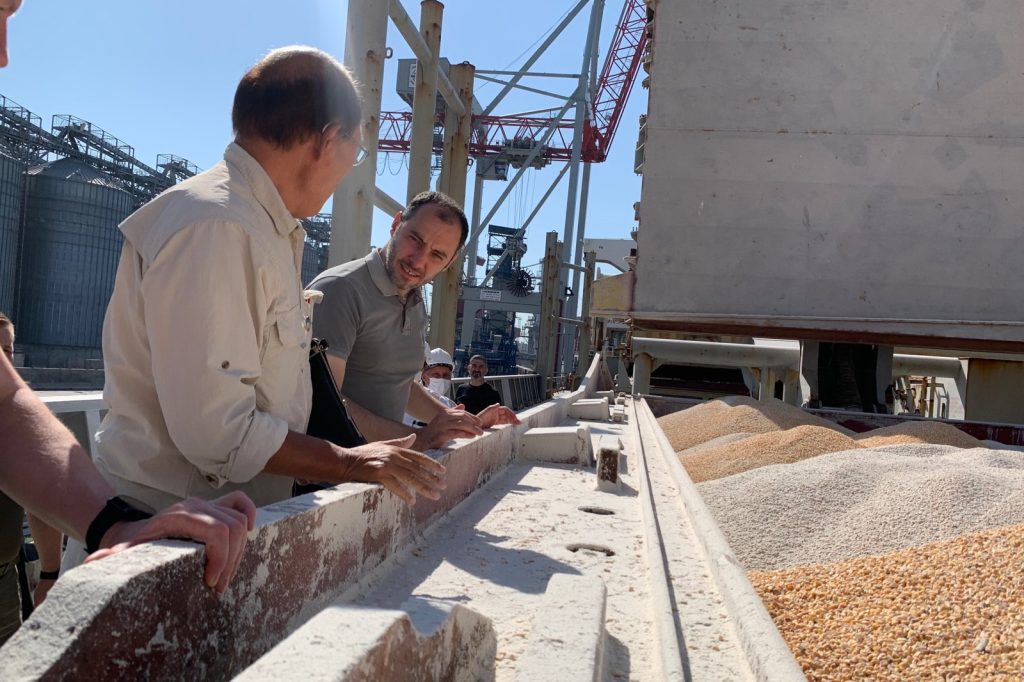
UNITED NATIONS, September 24 — A coalition of 51 countries and the European Union has backed a joint statement calling for the revival of the Black Sea initiative, the wartime arrangement that once allowed Ukraine to export grain by sea. The statement was issued on the sidelines of the United Nations General Assembly, where world leaders have gathered this week. The United States did not support the statement, according to the Kyiv Independent, leaving Washington outside a coalition that includes the EU and dozens of UN member states.
The core demand is the restoration of safe commercial shipping in the Black Sea, where attacks on vessels have escalated since late June.
Turkey’s Mediation Track
Ankara has moved ahead of the diplomatic statement with a plan of its own. Turkish Foreign Minister Hakan Fidan said in Istanbul on August 31 that Turkey has prepared a proposal for the safe passage of grain via the Black Sea and is in contact with both Russia and Ukraine regarding it. Turkey controls the Bosporus and Dardanelles straits linking the Black Sea to the Mediterranean, giving it leverage no other mediator holds.
Ankara’s draft memorandum targets attacks on civilian shipping. Russia has reported diplomatic talks on Turkey’s Black Sea grain plan, while the Kremlin says Russia is finding alternate routes for its own grain amid the attacks.
EU foreign policy chief Josep Borrell has called for a revival of the Black Sea grain deal. The record shows the scale of the problem Turkey is trying to address. At least 25 Turkish-owned ships were hit in the Black Sea since late June, according to reporting on Fidan’s ceasefire proposal.
The Original Corridor and Its Collapse
The original Black Sea Grain Initiative was brokered in July 2022 by Turkey and the United Nations. It created a humanitarian maritime corridor from Ukraine’s ports of Odesa, Chornomorsk, and Yuzhny/Pivdenny, and remained in force until Russia withdrew in July 2023. The joint statement does not itself reopen the corridor.
It signals political backing for Turkey’s mediation and for renewed shipping guarantees — a diplomatic pressure instrument rather than an operational agreement. It endorses the principle of safe navigation, isolates Russia rhetorically, and hands Turkey a mandate to keep negotiating.
Caitlin Welsh of the Center for Strategic and International Studies told the Kyiv Post that the Black Sea is as important for global wheat trade as the Strait of Hormuz is for global oil trade.
Beyond Grain
The stakes extend past agriculture. For energy markets, the Black Sea is also a transit corridor for Russian and Kazakh crude and refined products. The same insurance, escort, and mine-avoidance questions that govern grain convoys apply to tanker traffic.
Whether the statement translates into a working corridor depends on Moscow’s willingness to accept the Turkish memorandum — and on the willingness of shipowners and insurers to return to a war-risk zone where Turkish-owned vessels have already been struck since late June.
Sources
- 51 countries back Ukraine in joint statement calling for Black Sea…
- Black Sea Grain Initiative | Joint Coordination Centre | United Nations